
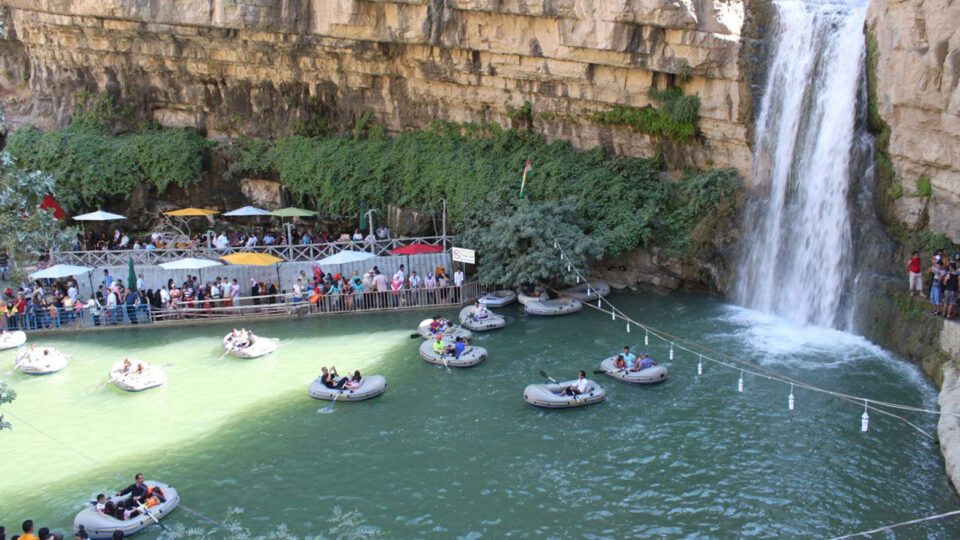
Growing visitor numbers and new investments strengthen tourism as a key driver of the Region’s economy.
In the contemporary global economy, tourism has evolved into a cornerstone of development, fostering cultural exchange and peace while driving massive financial returns. According to the United Nations Tourism Organization (UNWTO), global tourism generated approximately $10.9 trillion in 2024 and provided employment for 350 million people. For the Kurdistan Region, this sector is increasingly viewed not just as a seasonal highlight, but as a primary pillar for a post-oil economy.
Record-Breaking Success in Eid al-Adha
The Kurdistan Region recently experienced an unprecedented surge in tourism during the Eid al-Adha holiday, welcoming a record 350,000 visitors. This figure represents a significant increase compared to previous holidays such as Newroz and Eid al-Fitr. This growth can be attributed to several strategic factors. First, political and security stability provided travelers with the confidence to visit, a sharp contrast to the tensions that dampened travel earlier in the year. Second, the timing of the holiday aligned with favorable seasonal weather, extended school breaks, and the timely payout of government salaries, creating a perfect environment for a domestic and regional travel boom.
Provincial Performance and Capacity
The influx of tourists tested the region’s hospitality infrastructure, which responded with high occupancy rates across all major provinces:
Erbil:The capital’s 445 hotels and 47 tourist villages were largely fully booked, maintaining a steady stream of visitors throughout the holiday.
Sulaimani:With nearly 430 hotels and motels, including several five-star establishments, authorities reported that venues operated at maximum capacity, supported by round-the-clock service in the restaurant sector.
Duhok:Home to 900 tourist sites, the province saw pre-booking rates between 70% and 90%, driven largely by organized tour groups from central and southern Iraq.
Halabja:The scenic Hawraman region faced immense traffic, where newly constructed cabins and tourist homes played a vital role in accommodating the overflow of overnight guests.
The Economic Multiplier and Labor Laws
Tourism acts as a powerful financial catalyst, with studies suggesting that a single tourist’s spending benefits over 23 different professions, from hoteliers and transport providers to local bakers and butchers. This “multiplier effect” ensures that revenue is distributed across various layers of society.
Crucially, this growth is anchored by a robust legal framework. Under the Kurdistan Tourism Law No. 9 of 2022, tourism projects are mandated to employ at least 75% local labor. This policy is a strategic tool for job creation, particularly for graduates, and helps elevate individual incomes. Furthermore, the region places a high value on external tourists from broader Iraq and abroad, as these visitors typically have higher spending power and inject vital foreign currency into the local market.
Financial Impact and Investment Dominance
Estimates suggest the Eid al-Adha holiday alone generated a windfall of between $70 million and $87.5 million in cash liquidity. This calculation is based on an average spend of $200–$250 per visitor on lodging, food, and shopping.
This short-term success is backed by long-term investment. Between 2019 and 2024, the Kurdistan Regional Government (KRG) oversaw 80 strategic tourism projects with a total capital investment exceeding $7.5 billion. Remarkably, tourism has emerged as the leading sector for investment, accounting for 38.7% of the region’s total investment capital—surpassing both manufacturing and agriculture.
Governance and Sustainability
Managing such a massive influx required seamless inter-agency cooperation. The Ministry of Interior streamlined checkpoints, the Ministry of Health deployed emergency teams, and local municipalities focused on sanitation. Simultaneously, monitoring committees enforced price controls to prevent gouging and protect the region’s reputation.
However, the article emphasizes that the “core product” of Kurdistan’s tourism is its natural environment. As visitor numbers grow, the pressure on ecosystems increases. Sustainable management and responsible waste practices are essential to ensure that the region’s natural beauty remains a viable attraction for future generations.
The Vision for 2030
The KRG’s strategic blueprint aims to reduce reliance on oil by expanding its tourism inventory to 1,500 destinations, with a goal of attracting 20 million visitors annually by 2030. Achieving this requires four critical reforms: modernizing transportation infrastructure, investing in the region’s 3,500 archaeological sites, launching sophisticated digital branding campaigns, and further streamlining the e-visa process.
The record-breaking Eid crowds and a $7.5 billion investment portfolio prove that Kurdistan is well-positioned to become a premier regional hub, transforming seasonal surges into a stable, sustainable economic future.
By Gharib Ali Salim