
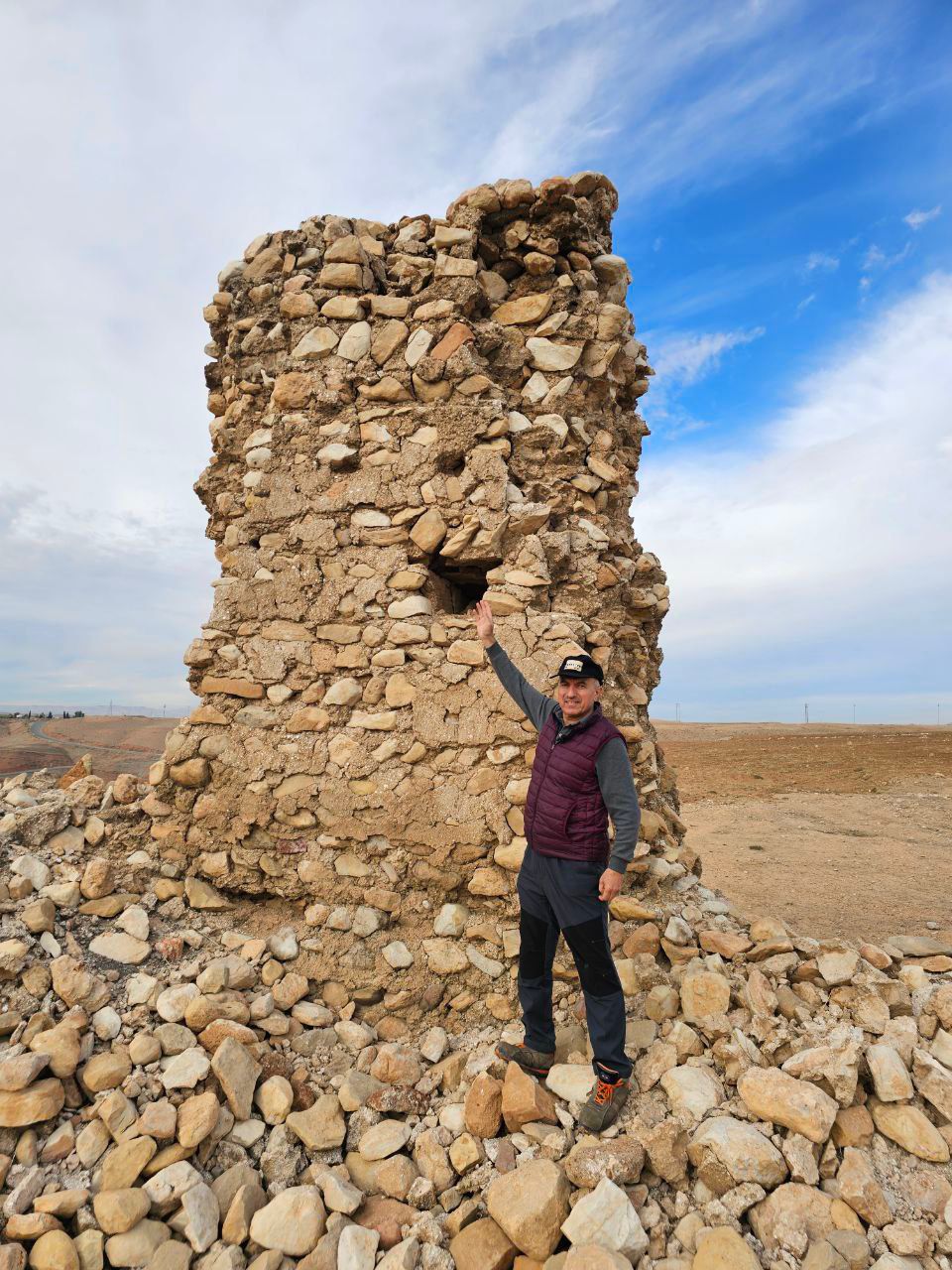
The Kurdistan Region is home to a vast number of archaeological sites, including several grand, high-altitude castles that narrate the history of Kurdistan’s past ruling powers to current generations and tourists alike. However, many of these sites are under threat of distortion or destruction due to neglect, unauthorized interference, or harsh weather conditions. This neglect risks losing a vital part of Kurdistan’s civilizational history. Investing in these sites and developing them for tourism would not only remove these threats but also preserve the identity of a “golden age” of Kurdish Princes and Kings. In this report, we take a field visit to Sartka Castle, built by the Prince of Soran on a ridge in the Dukan District, whose remains still stand before the eyes of visitors today.
Geographic Location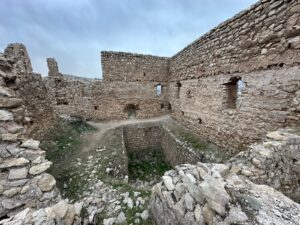
Sartka Castle is one of Kurdistan’s most significant landmarks. It is located in the Qashqoli resort area within the Dukan District of Sulaymaniyah Province. It sits approximately 65 km northwest of Sulaymaniyah city and about 120 km east of Erbil. The castle was constructed on a hill overlooking the surrounding roads and the Dukan River (known as the Lesser Zab). It is situated near the main transit road and the tourist cabins of Qashqoli, only about 200 meters away from the primary leisure spots. The riverbanks surrounding the castle are densely packed with tourism projects and rest areas, offering a picturesque view.
Structure and Architecture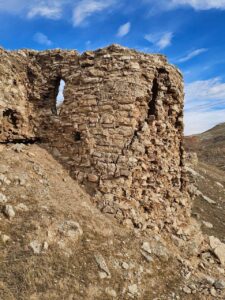
During my field visit, I explored the various sections of the castle. It is clear that the structure served a primarily military purpose, as this location marked the border between the Soran and Baban Emirates in the 19th century.
The castle covers an area of over 700 square meters and was originally built as a three-story square structure. It features a central hall measuring 10m x 5m, with a storage basement beneath it. The site also contained a water well and a traditional clay oven (*tandoor*). Surrounding the central hall are four rectangular rooms (8m x 4m). At each of the four corners of the castle stands a defensive tower (turret) used for surveillance and military guarding, equipped with embrasures and lookout points for defense.
While many of the walls remain, most of the castle has collapsed. In some sections, the walls stand between 2 and 8 meters high, but the exterior walls are largely in ruins. The remaining structure is under immediate threat of total collapse, which would result in the complete loss of its historical features. The castle was built using mountain stone, lime, and plaster. The walls are nearly one meter thick in some areas. No roofs or ceilings remain, but the beam slots in the walls of the second floor suggest that wood was used in the roofing, likely covered with soil—a detail left for archaeologists to confirm during future excavations.
Historical Background
According to historical sources, the castle dates back to the era of the Soran Emirate under the rule of “Mir Mohammad” (widely known as “Pashay Gawra” or the Great Pasha of Rawanduz), who reigned from 1813 to 1837. His authority extended east to the Dukan River, bordering the Baban Emirate. Sources suggest the castle was built between 1825 and 1830 as a military outpost to monitor trade routes between the two emirates and serve as a communication point, as it was part of a larger network of fortifications protecting the borders of the Soran Emirate.
Threats to the Site and Visitor Safety
Because the castle is located so close to popular tourist destinations, a large number of visitors climb the ruins annually. People often walk along the fragile remains of the walls, causing further damage to what little is left standing. In addition to human impact, annual rainfall and weather cycles continue to erode the structure. Furthermore, the lives of tourists are at risk; there is a significant danger of falling from the heights or being struck by falling stones while walking beneath the unstable walls.
The Importance of Developing the Site for Tourism
To date, no significant archaeological preservation work has been done at Sartka Castle. The best way to save it from total vanishing is to convert it into a formal tourist site. This would facilitate its restoration and protection while simultaneously generating revenue. Under current conditions, the influx of domestic and foreign tourists is actually damaging the site rather than benefiting it.
A scientific approach is needed: first, a thorough archaeological excavation, followed by a professional restoration based on its original design, and finally, the provision of services and management. Developing the castle would:
* Save it from destruction.
* Serve as a historical identity for a period of Kurdish self-rule.
* Enhance the aesthetic value of the Dukan tourism zone.
* Create a “Tourism Brand” or a local museum for the Dukan District.
Proposals for Development
1. Government Action: The government should oversee excavations, restore the structure, and manage the site.
2. Private Investment: The castle could be leased to an investor under strict archaeological guidelines to restore it and save it from ruin while transforming it into a cultural landmark that attracts more tourists.
3. Functional Preservation:The castle could be repurposed as a museum or a heritage café to generate income for its own maintenance and protection under archaeological supervision.
By: Nadir Rosti