
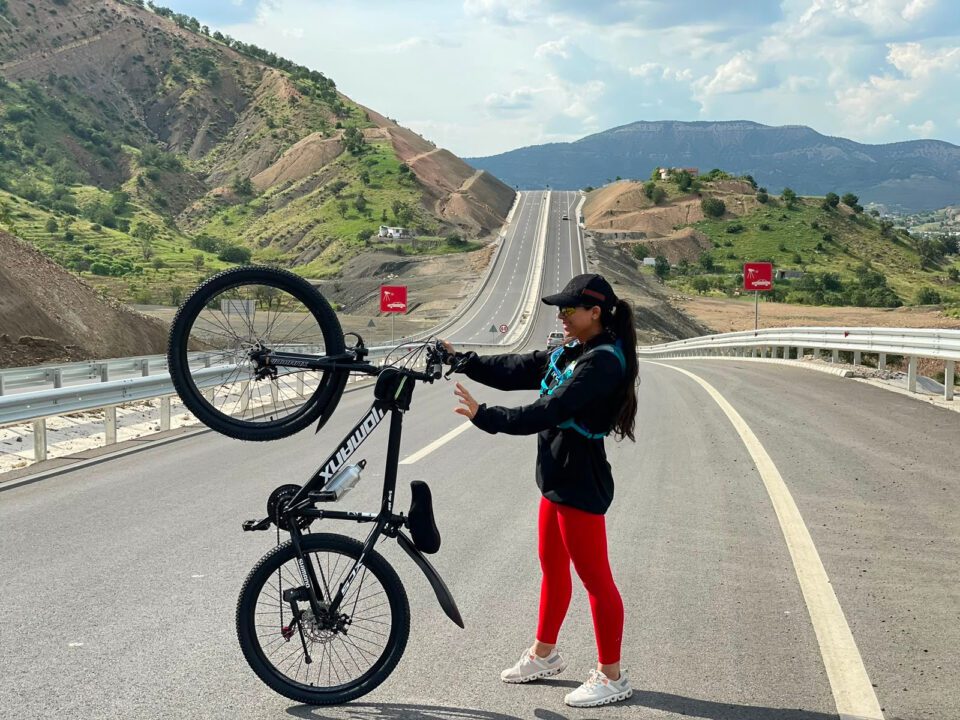
Pirshang Khalid Namiq, a Kurdish athlete, journalist and member of the Kurdistan Climbing Club, discusses her journey from walking to marathon running, the benefits of sport, and the challenges and opportunities facing women in athletics.
For Pirshang Khalid Namiq, running started as a simple decision to become more active. Eighteen months later, it has become an important part of her life, taking her from regular walking and exercise to competitive races and marathons.
Born in 1991 in Naghadah, East Kurdistan, Namiq resides in Erbil. She is a journalist, a graduate of the Department of Administration, a mother of two, and a member of the Kurdistan Climbing Club.
Namiq began with regular exercise and walking before gradually taking up running. Encouraged by friends involved in athletics, she improved her fitness and eventually began participating in races. The physical changes she experienced soon convinced her that exercise offered much more than weight control.
“I felt my strength, ability and physical changes,” Namiq says. “I realized that exercise is not only beneficial for weight and the body, but is also important for health and blood circulation.”
Running has also become a way for her to escape the pressures of daily life. When she runs, particularly alone, she says she can clear her mind and distance herself from stress and the struggles of everyday life.
Her participation in races and the medals she has earned are among her proudest achievements. The Erbil Marathon 2025 remains especially memorable.
Yet her experience as a female runner has also shown her that women do not always enjoy the same freedom to exercise in public.
“Sport does not have a specific time—you can exercise whenever you want,” she says. “But women still do not have that freedom at all times.”
She recalls running 10 kilometers early one morning when dozens of vehicles slowed as they passed her, while some drivers honked their horns. For Namiq, the experience highlighted the unwanted attention women can face simply for exercising in public.
She believes such attitudes remain a barrier to women’s participation in sports. Although she sees society gradually becoming more open, she says more change is needed to give Kurdish women the freedom and opportunities they deserve.
Namiq’s family has been an important source of support throughout her journey. She also believes the media can play a greater role in changing attitudes toward women’s sports.
With smartphones, social media and digital platforms reaching large audiences, she argues that media organizations have an opportunity to promote women’s participation in athletics and give greater visibility to female athletes and their achievements.
“Women’s sports have not received enough attention in Kurdish media,” she says. Greater coverage, she believes, can help broaden public attitudes and present women’s participation in sport as an expression of freedom and equality.
Her involvement in sport has also expanded beyond running. Through her athletic journey, Namiq has become interested in tennis, wrestling, swimming, mountaineering and cycling. Her membership in the Kurdistan Climbing Club reflects that broader interest in physical activity and outdoor sports.
She says she has never considered giving up exercise. Instead, her experience has encouraged her to explore new sports and continue challenging herself.
Her commitment has required changes outside training as well. She has reduced sugar, salt, oil, starches and soft drinks—foods and drinks that previously featured regularly in her diet.
The discipline of sport has taught her lessons that extend beyond athletics. She says it has strengthened her patience, calmness and self-control and taught her that meaningful results require consistent effort.
Namiq does not have a single target for the coming years. Her goal is to continue running, participate in races and marathons, and keep challenging herself. For her, success is not only about finishing first or second.
“What matters is continuing to make the effort and not losing motivation,” she says.
Her message to young women considering sport is equally direct: do not let negative comments stop you. Once you begin, she says, remain committed and do not allow difficulties to discourage you.
She also has a message for women of every age: “Age does not matter, and it is never too late to think about your health. So exercise and live a healthy life.”
For Namiq, the lesson of her journey is simple: reaching a goal requires effort, regardless of the cold or heat, or how near or far the finish line may be.
After only 18 months, she is still at the beginning of her athletic journey. But she has already discovered what keeps her moving forward: discipline, perseverance and the determination to keep running.