
Economic Vulnerability Under the Shadow of Regional Conflict
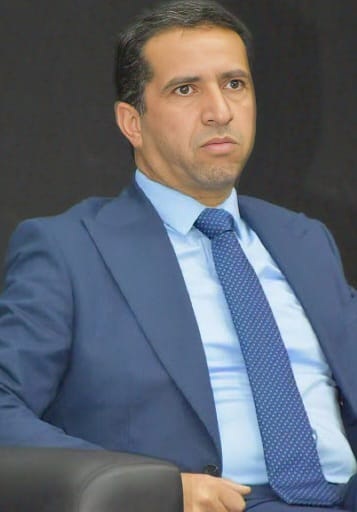
Dr. Hiwa M. Khalil
The cabinet led by Ali Al-Zaidi has formally backed the Central Bank’s decisions and the committee drafting the 2027 federal budget. Central to this budget is the devaluation of the Iraqi dinar against the U.S. dollar. While the Iraqi government has framed this move as being in the public interest, the reality on the ground paints a starkly different picture: it places an even heavier financial burden on ordinary citizens.
For the Kurdistan Region, the draft budget offers no meaningful gains. It is essentially a copy-paste of previous years’ budgets—budgets that Erbil has consistently contested. Moreover, Baghdad repeatedly withheld the funding shares allocated to the Kurdistan Region by the Iraqi parliament, using various pretexts.
Ultimately, Iraq’s crises in its budget, economy, and financial sector are far more political and military in nature than they are purely economic. This makes true economic reform in Iraq exceptionally difficult, as these problems are rooted in the complex political and military dynamics that dominate the country’s governance.
The Illusion of Economic Stability
While this structural crisis has haunted Iraq since 2003, the U.S.-Iran conflict and Iran’s closure of the Strait of Hormuz—which effectively blocked Iraqi oil exports—exposed just how fragile Iraq’s economy truly is.
Despite Iraq and its allied Shia groups serving as Tehran’s primary partners (even supporting Iran during the U.S.-Iran conflict and pushing for the withdrawal of American forces), Tehran did not hesitate to block Baghdad from exporting oil through the Strait of Hormuz. The resulting economic collapse forced the government to devalue the dinar simply to secure public sector payrolls.
The Political Fallout: Isolation and Regional Hegemony
Politically, Iraq has been caught in a continuous cycle of political inclusion and marginalization since the fall of the Ba’ath regime in 2003 via the international coalition. Initially, it was envisioned that Iraq would seamlessly re-enter the international community. Instead, the country fell squarely under the heavy orbit of Tehran—a capital itself grappling with international isolation, particularly from Western political spheres.
In essence, Baghdad aligned itself with an already isolated state, resulting in a double layer of diplomatic marginalization. While successive Iraqi governments have attempted to expand political and economic ties with neighboring countries, Tehran’s dominant footprint—compounded by deep-seated tensions between Iran and Iraq’s other neighbors—has prevented Baghdad from executing a successful, balanced, and independent foreign policy.
Following stern warnings from the Donald Trump administration, Baghdad did attempt to diversify its diplomatic and economic partnerships. However, the immense leverage wielded by armed militias, Tehran’s overarching hegemony, and the ideology of the “Resistance Axis” remain formidable roadblocks to diversifying Iraq’s foreign relations.
A Precarious Future
Looking ahead, Iraq’s post-2003 trajectory of international isolation risks intensifying, particularly in the wake of the U.S.-Israeli conflict with Iran, should Baghdad continue to ignore warnings from Washington.
• Targeting Leadership: Washington has already added several leadership figures within the Popular Mobilization Forces (PMF) to its blacklist and successfully blocked figures like Nouri al-Maliki from assuming the premiership.
• Military Escalation: Following the drawdown of U.S. troops, American airstrikes against PMF bases and infrastructure could expand significantly.
• Financial Sanctions: If the PMF militias continue to serve as a conduit for channeling U.S. dollars into Iran, it is entirely possible that the Central Bank of Iraq will face direct U.S. sanctions.
Should such sanctions materialize, it would spell the complete collapse of Iraq’s political and economic systems. In that scenario, adjusting the exchange rate of the dinar will offer zero relief, leaving the citizens of Iraq—including the Kurdistan Region—to bear the heavy cost of Baghdad’s ill-conceived domestic, economic, and security policies.