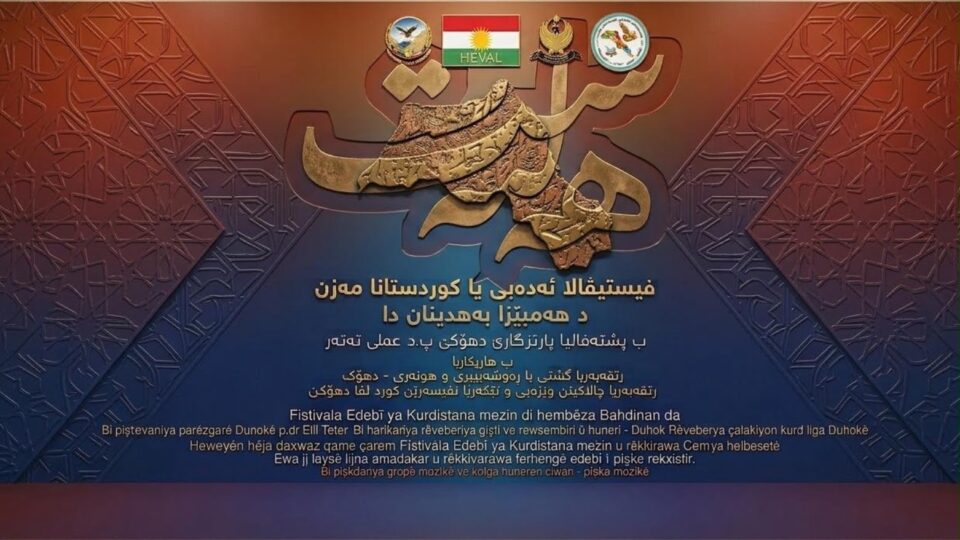
The fourth edition of the Greater Kurdistan Literary Festival was held at the Duhok branch of the Kurdish Writers’ Union, bringing together writers, poets, artists, intellectuals, and cultural activists.
Rizgar Chawshin, head of the festival, said the event was organised to bring together figures from the fields of literature, art, and culture and to provide a platform for presenting works and exchanging experiences.
“This festival is being held in Duhok to bring together writers, poets, artists, and activists in the fields of culture and literature. It includes several literary, artistic, and musical programmes, and its goal is to revive the literary and cultural fields and create an opportunity for creators to come together,” Chawshin said.
He said the festival was not limited to literature and poetry, adding that music, awards, and the recognition of cultural and artistic figures were also included in the programme.
One of the festival’s main sections was dedicated to music and the honouring of cultural and artistic figures, including Ahmad Abdulla Zamo, a linguist from Duhok; Sarwat Mirani Agha Wahid Beg; Halagir Muhammad Mohsin, a film producer from Duhok; Karin Sheikh Salam from Sulaimani; and Faraydoun Mir Ahmadi from Rojhelat, eastern Kurdistan.
The festival also featured several forms of Kurdish poetry, including classical “aruzi” poetry, classical native poetry, and free verse. A dedicated section allowed poets to present and read their works.
Chawshin said awards were presented to several participants, cultural figures, and organisations during the festival. Awards were also designated for members of the evaluation committee, headed by Alend Mazmuri, with Atyat Classic and Shaban Salim serving as committee members.
According to Chawshin, awards were set aside for 36 participants in recognition of their contributions and participation. The festival also honoured the Ala Cultural Organisation and presented awards to selected figures in the fields of literature and art.
“Literature is not limited to writing and reading books, but is part of the cultural identity of society,” Chawshin said. “That is why we wanted the festival to be a space where poets, writers, artists, and cultural activists can gather in one place and share their works and experiences.”
He added that the organisers hoped the festival would contribute to supporting and strengthening Kurdish literature and culture by providing creators with an opportunity to present their works, hold discussions, and exchange experiences.
The fourth Greater Kurdistan Literary Festival was held at the Duhok branch of the Kurdish Writers’ Union.