
By Younes Mohammad
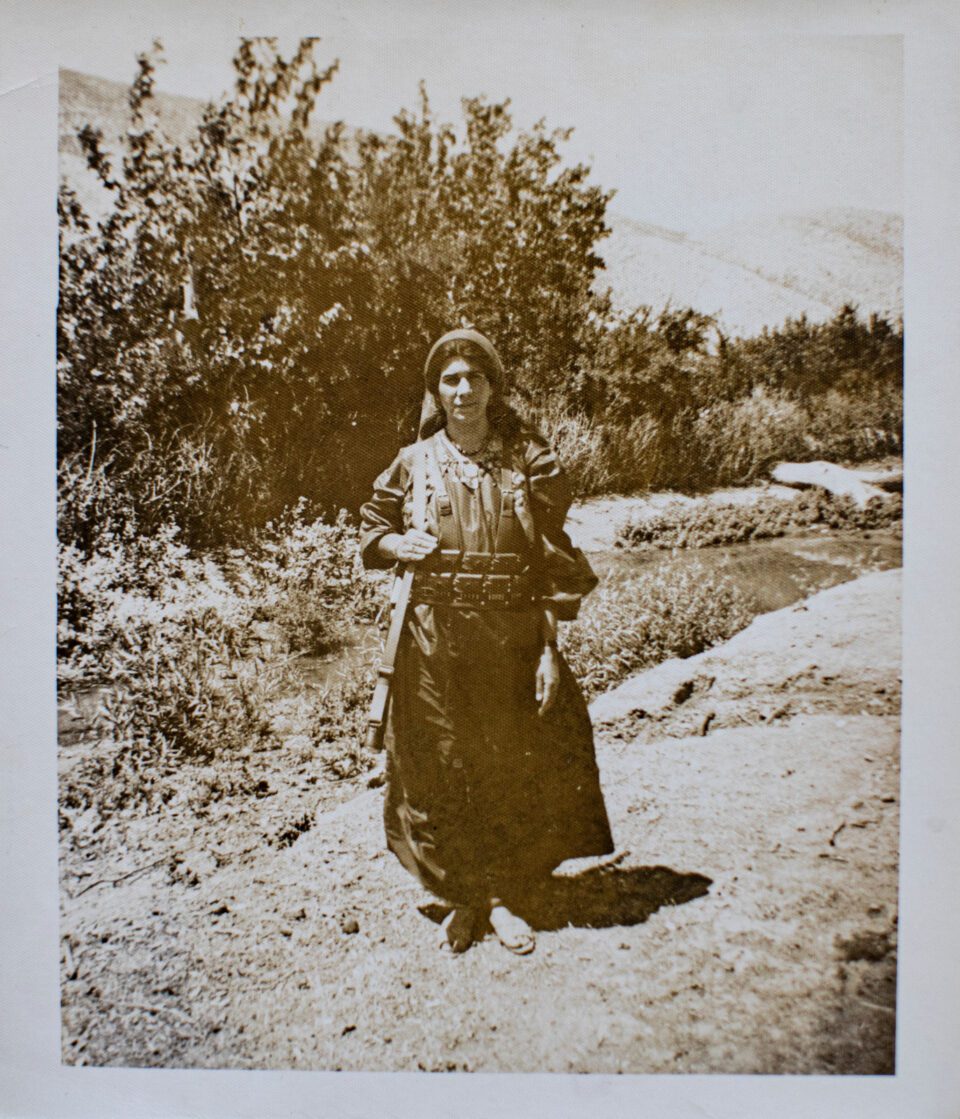
Years later, when I showed this photograph to my mother, her face suddenly transformed, not with a smile, but like a storm breaking over a calm sky. My aging mother seemed younger, stronger, yet deep in her eyes stretched a pain only someone who has witnessed war could understand. A pain that speaks without words being said, which says everything through the silence.
She stared at the photograph for what felt like forever, until time itself seemed to pause. Then the tears came, slow, heavy and in her eyes a sea formed, holding a pearl in its depths as if it had been kept there for eternity. The tears lingered, and finally she spoke:
“You were on my back, and I was afraid that the sound of my frightened breath would scare you even more. I ran, trying to breathe quietly.” Then she smiled faintly and added, “Sometimes, being a mother means even your fear must remain unseen. The mountains were the only friends we had.Down below, the war with the regime had swallowed everything, and home no longer offered a place to stay. The men were elsewhere, in battle, or in the distance that war itself had carved. And the women remained, with their children, navigating the narrow, rugged paths of the mountains, enduring nights that meant only one thing: surviving until morning.”
The years of exile in Iran, in the basement of our house, far from any real home, were marked by a chest that held everything my parents had salvaged from our homeland. Inside that chest was a worn photo album. Most of my childhood passed in that basement, turning the pages of that album. That album became my window into Kurdistan. Through its photographs, I could imagine what Kurdistan looked like, where it lay, how beautiful it was, and how far from reach it had become.
One of those photographs were of my mother herself, dressed for war, amidst the rugged beauty of Kurdistan. Perhaps more than any image I have ever seen, I have stared at that photograph. For me, it was Kurdistan itself: a land as beautiful, resilient, and quietly wounded as my mother.
Even as a child, I should have understood what it meant to be Kurdish. For all Kurds. For the children and mothers, as hard as it was for our fathers, the Peshmerga.
That photograph opened my eyes to the harsh realities of war and life on the margins. It turned me into a chronicler of hidden wounds and silent hopes, someone whose frames tell the stories of people touched by conflict. Every photograph I take now echoes my childhood and the lives of those who grew up in the shadows of war. From fear and exile, I learned to capture truth through my images, and bring life to a world that might otherwise be forgotten.
That photograph made me realize I did not want to become a doctor. I did not want to become an engineer.
That photograph made me a photographer