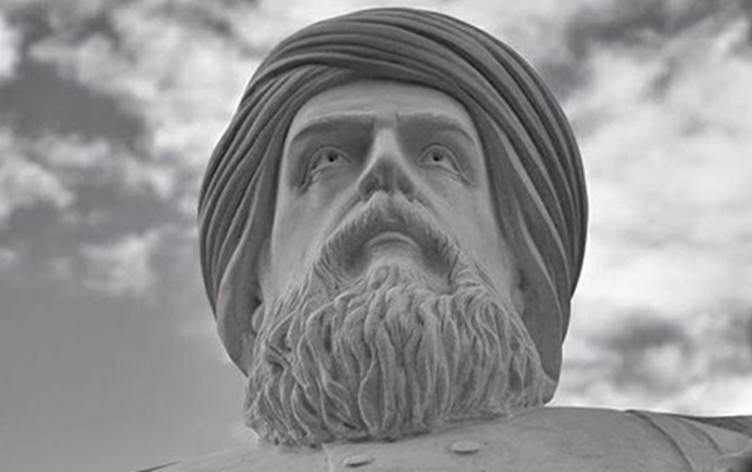
When the history of Kurdish literature and classical poetry is discussed, one name continues to echo with distinction — Wafayi, a poet whose verses still inspire artists today. His works remain a foundation for Kurdish music and literature, with many of his poems sung as timeless songs.
Wafayi’s full name was Mirza Abdul-Rahim Sablakhi, born in 1844 in Mahabad. He pursued primary education and seminary studies in Islamic sciences and Arabic in his hometown, where he obtained a clerical license. Unlike many of his contemporaries, however, he did not practice as a cleric. Known simply as Mirza, he instead ran his own private school, teaching children and sustaining himself without accepting alms or charity.
A gifted scholar, Wafayi mastered Persian and Arabic alongside Kurdish. His teaching extended beyond religious studies into poetry, inspiring a number of his students to become poets themselves. Deeply attached to the nature of Kurdistan, he lived a modest but creative life.
Later, Wafayi moved to Hakkari and then Sulaymaniyah, where he became closely associated with Sheikh Ubaidullah Nahri, who admired his poetry and entrusted him with cultural and literary duties. His verses reveal the influence of Nali, the great Kurdish poet, whose eloquence and imagery are echoed in Wafayi’s own works.
More than a century after his death, Wafayi’s appearance came to light when Sakar Sofizadeh, a writer and poet from his lineage, discovered a photograph believed to include him. The image, taken between 1899–1900 by Alikhan Qajar, the official photographer of the Qajar kings, shows six religious figures and teachers from Mahabad. Although it confirms Wafayi’s presence, it remains unclear which figure in the photograph is him.
The poet’s social life and his connection with the Nahri Sheikh family are well documented, as he also served as a teacher for their children. Writing in Kurdish, Persian, and Arabic, he adopted the pen name Wafayi and left behind a collection of poems celebrated for their beauty and depth, which has been republished multiple times.
Wafayi passed away in 1914 during his pilgrimage to Mecca and was laid to rest in the Damascus valley. His legacy endures, not only in literature but also in the cultural memory of Kurdistan, where his words continue to resonate across generations.