
An annual celebration marked by fasting, traditional rituals and gatherings that strengthen faith, protect nature and reinforce Yazidi cultural identity.
Kurdish Yazidis this week celebrated the annual festival of Khidr Elias, one of the most meaningful religious and cultural occasions in their ancient tradition. Observed each year in mid-February, the festival carries deep spiritual symbolism centered on peace, protection of nature and community solidarity.
The Yazidis, an indigenous people of Kurdistan who have preserved their distinct beliefs and heritage for centuries, continue to uphold the rituals of Khidr Elias with devotion and authenticity. The celebration begins with a three-day fast observed by followers as spiritual preparation for the holy day.
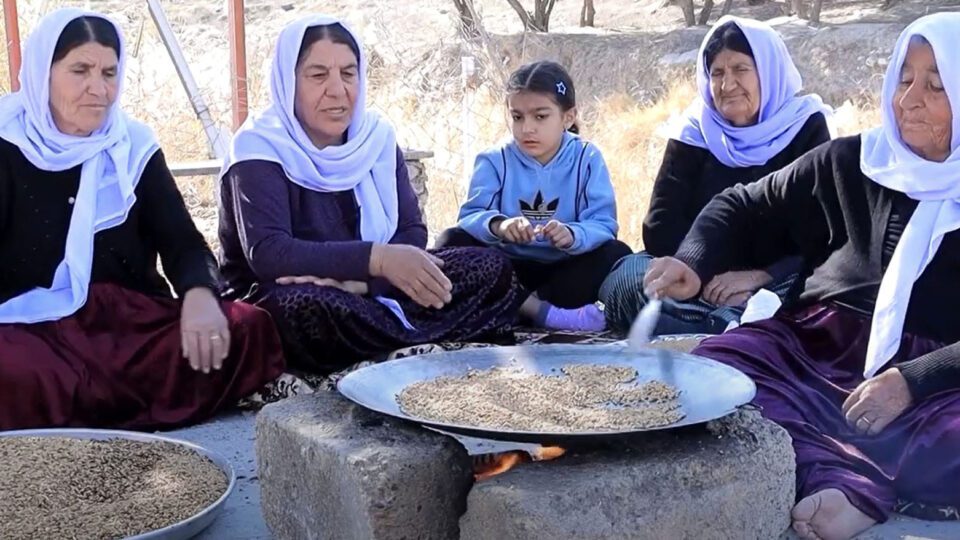
A central feature of the festival is the preparation of a traditional dish known as Pakhon or Kachka. In the days leading up to the celebration, Yazidi women gather in the courtyards of their homes to prepare a mixture of roasted grains and dried legumes. Wheat serves as the main ingredient, combined with chickpeas, lentils, broad beans, corn, pumpkin seeds and sunflower seeds. The ingredients are roasted over a wood fire on a large griddle, then either ground or served whole as a snack during the ceremonies.
Khidr Elias is also known among Yazidis as a bloodless festival. During this period, no animals are slaughtered and no meat is consumed. The practice reflects respect for the sanctity of life and the protection of living creatures, values deeply rooted in Yazidi belief.
On the day of the festival, families visit one another and share the food they have prepared along with tea for their guests. The occasion goes beyond religious observance. It strengthens social bonds and reaffirms a cultural identity that Yazidis have preserved despite centuries of hardship.
Many worshippers visit shrines and temples near their communities to pray. According to Yazidi tradition, individuals who bear the name Khidr or Elias are required to fast for three consecutive days during the year in honor of the occasion.
Through the celebration of Khidr Elias, Yazidis reaffirm their enduring connection to faith, community and the natural world.