
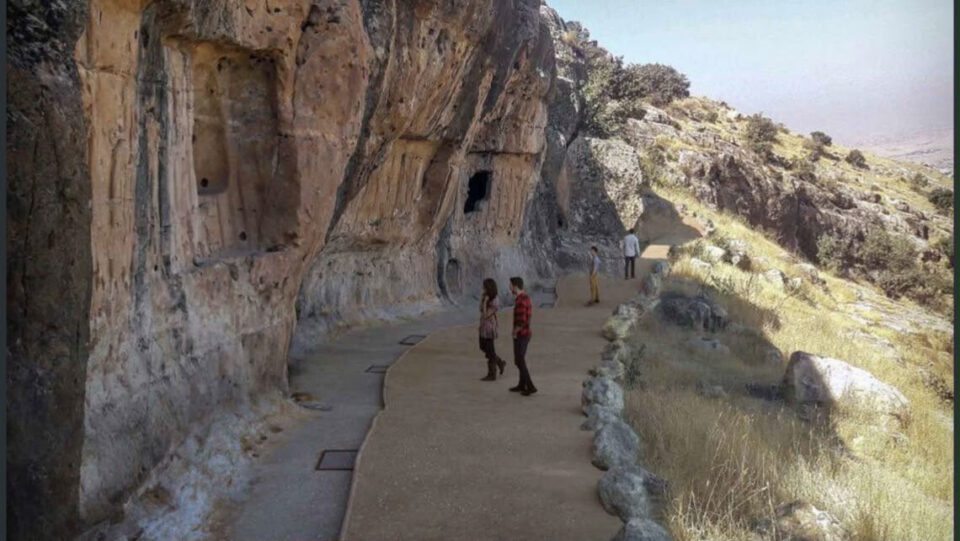
The 130-square-kilometre site brings together some of Kurdistan’s oldest archaeological
treasures and is being prepared for UNESCO World Heritage nomination
Duhok is preparing to open Iraq’s largest archaeological park, a landmark project expected to boost cultural tourism and showcase the Kurdistan Region’s rich ancient heritage. Scheduled to open by the end of October, the Jerwan–Faida Archaeological Park spans 130 square kilometres and is regarded as one of the region’s most significant archaeological developments.
The project is the result of cooperation between the Duhok Directorate of Antiquities and Heritage and the University of Udine in Italy. The park includes several internationally important sites, including the Faida Canal, the Jerwan aqueduct, and the Khinis archaeological area.
Among its most remarkable discoveries is a 340-kilometre Assyrian water canal system that carried fresh water from the mountains of Duhok to ancient Nineveh during the seventh and eighth centuries BC. Archaeologists have also uncovered one of the largest Assyrian rock reliefs, depicting King Sennacherib in a ceremonial scene, along with traces of original blue and red pigments that reveal the carvings were once brightly painted.
Bekhas Brifkani, Director of Antiquities and Heritage in Duhok, said the park possesses the unique historical and cultural characteristics required for UNESCO World Heritage recognition. Authorities are working toward securing international designation for the site.
To ensure long-term preservation, researchers from the University of Udine have digitally documented the canals and rock reliefs using advanced three-dimensional laser scanning technology, creating a permanent digital archive of the monuments.
Officials say the project represents more than archaeological preservation. It forms part of the Kurdistan Regional Government’s broader strategy to develop cultural tourism by promoting the Region’s more than 6,000 archaeological sites.
Once completed, the Jerwan–Faida Archaeological Park is expected to become one of the Middle East’s leading destinations for archaeologists, researchers, and international visitors, further strengthening Duhok’s position as a center of history and heritage tourism.