
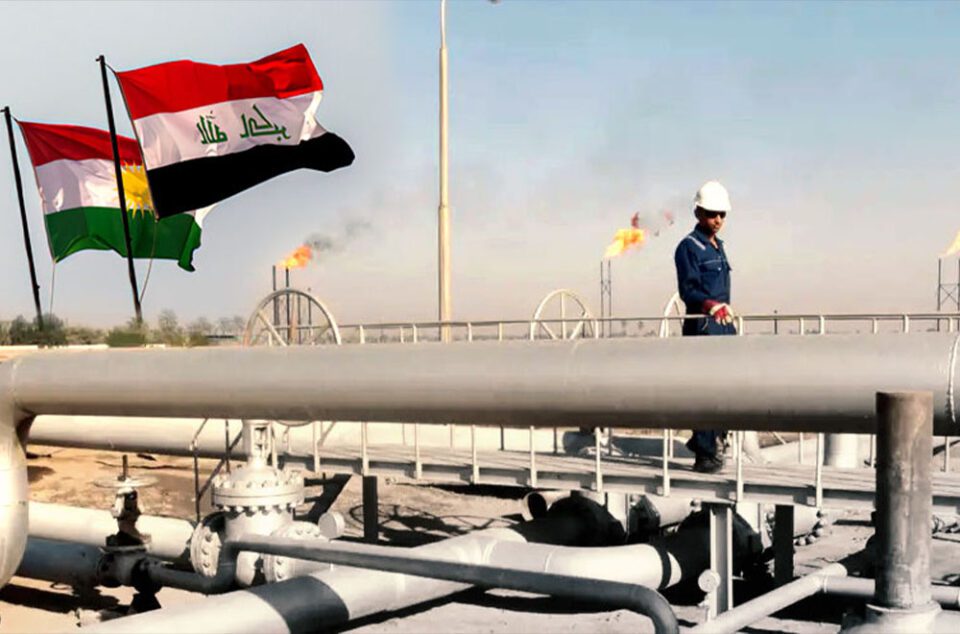
Iraq and Turkey have signed a temporary protocol to keep northern oil flowing to international markets.
The emergency one-year deal ensures that crude from both federal Iraqi fields and the Kurdistan Region will continue to bypass bottlenecks and reach the Turkish port of Ceyhan. It provides a vital economic lifeline for Erbil just weeks before the decades-old Iraq-Turkey Pipeline (ITP) agreement is set to expire on July 27.
The breakthrough followed intense negotiations in Ankara, where a high-level joint delegation from Baghdad and the Kurdistan Regional Government (KRG) met with Turkish Energy Minister Alparslan Bayraktar. Representing the Kurdish interest, Amanj Rahim, Secretary of the KRG Council of Ministers, confirmed the breakthrough, noting that the stopgap measure prevents a catastrophic halt to exports while a permanent, long-term treaty is hammered out over the coming year.
For the Kurdistan Region, the stakes could not be higher. The Ceyhan pipeline remains Erbil’s economic artery, currently carrying between 110,000 and 120,000 barrels of Kurdish crude daily, alongside roughly 200,000 barrels from federal Iraqi fields.
A total shutdown would have severely crippled the Kurdistan Region’s budgetary autonomy and broader economic stability. Baghdad had previously requested a straightforward one-year extension of the original 1973 framework, but Ankara rejected the proposal under current conditions, forcing a more complex, tripartite diplomatic effort.
The inclusion of KRG officials in the Ankara talks—including senior technical and economic directors from the Ministry of Natural Resources—signals a significant victory for Erbil. It highlights the indispensable role of Kurdish infrastructure and coordination in any viable regional energy strategy. Turkey’s energy ministry noted that Ankara is pushing for a more effective, modern grid, which includes supporting existing infrastructure with new connections.
The Ministry of Natural Resources released a statement stating that a high-level delegation from federal Iraq and representatives from the Kurdistan Regional Government’s (KRG) Ministry of Natural Resources—supervised by Dr. Khazal Hostani, Director General of Economic Affairs and Contracts, and Dr. Barozh Azo, Director General of Technical Affairs—visited Ankara to discuss the Iraq–Turkey oil pipeline agreement and to strengthen coordination and cooperation in the energy sector.
Dr. Khazal Hostani, Director General of Economic Affairs and Contracts at the Ministry of Natural Resources, stated that both sides agreed on drafting an executive protocol to continue the export of Iraqi and Kurdistan Region oil for a period of one year, and that this temporary agreement will be signed soon.
Both sides agreed on continuing coordination and cooperation to draft a long-term contract; the long-term agreement must be prepared and signed within this year.
With the temporary protocol buying twelve months of breathing room, attention now shifts to the grueling task of drafting a new 15-year treaty. Kurdish officials will need to maintain their unified front with Baghdad to ensure Erbil’s export rights and independent economic interests are firmly locked into the final draft before the new protocol expires in 2027.
The Kurdish Globe