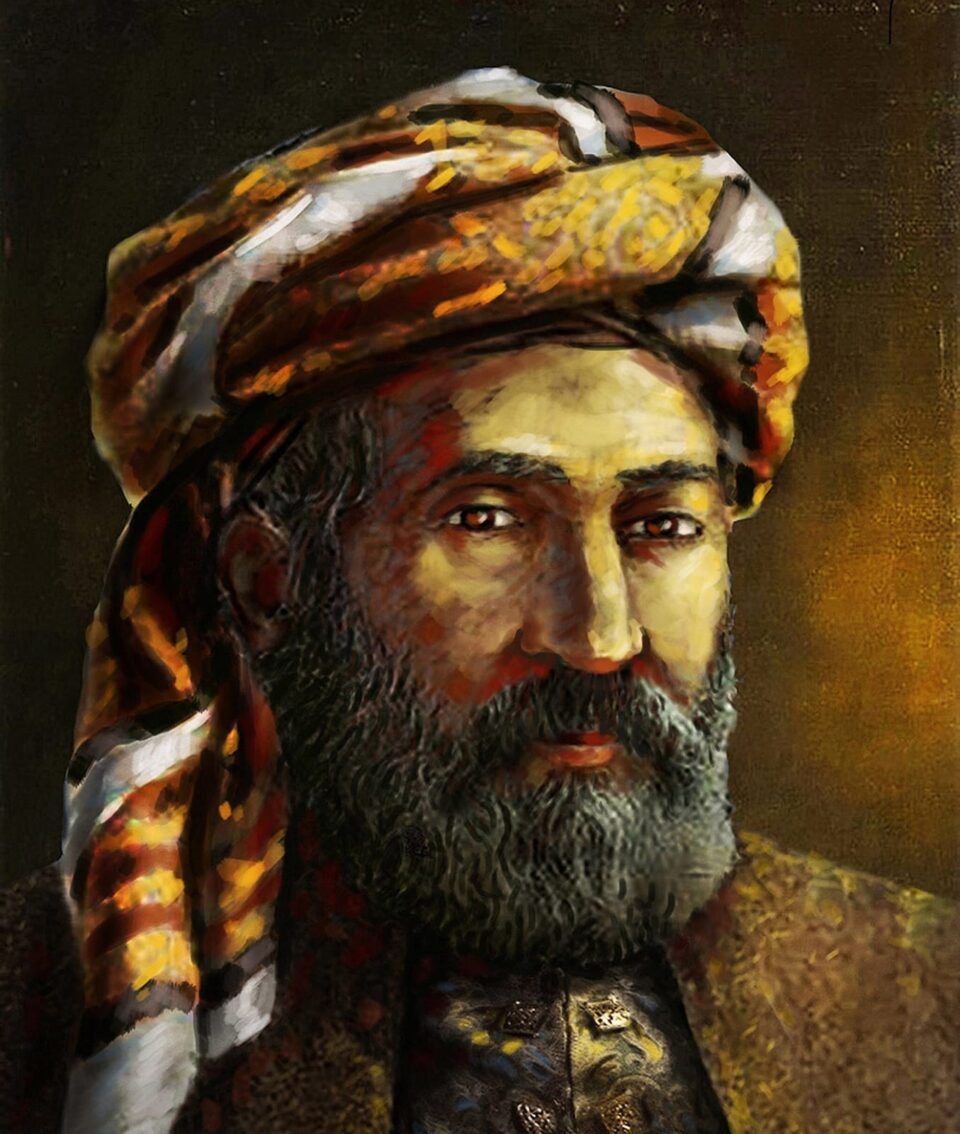
The Kurdish poet and philosopher from Miks who shaped early prose, mysticism, and intellectual tradition.
Faqi Tayran, one of the most luminous figures in Kurdish cultural and intellectual history, is widely regarded as a pioneer in poetry, philosophy, and early Kurdish prose writing. His real name was Muhammad, and he was born in 1590 in the Miks district of Hakkari, where he spent most of his life in the village of Warazur.
Historical sources suggest that he lived until 1660, although exact dates vary across different accounts. Despite these differences, he is consistently recognized as a major intellectual voice of his era, shaped by the madrasa tradition that flourished across Kurdistan and the wider region.
The title “Faqi” reflects his scholarly background as a student of religious sciences, while “Tayran” is linked to the influence of Fariduddin Attar’s mystical work Mantiq al-Tayr (The Conference of the Birds), which shaped his spiritual and philosophical outlook. Like many Sufi thinkers, he combined literary creativity with deep metaphysical reflection, exploring themes of existence, faith, and human meaning.
Faqi Tayran is considered one of the earliest Kurdish writers to develop prose alongside poetry, marking an important step in the evolution of Kurdish literary expression. His surviving works demonstrate a broad intellectual range, addressing philosophy, religion, history, and mysticism.
Among his well-known writings are Sheikh San’an, Qisay Birsiyan (The Speech of the Hungry), and Witay Aspi Rash (The Tale of the Black Horse). These works combine storytelling with philosophical reflection, often blending allegory, spiritual insight, and cultural observation.
Beyond his literary output, Faqi Tayran is also regarded as a thinker ahead of his time, with a strong ability to interpret the relationship between religion and philosophy. His writings reflect a deep engagement with both intellectual inquiry and spiritual understanding.
Over time, he became known under several pen names, including Faqi Tara, Faqi Garok, Miksi, Khwaja, and Mir Muhi. However, “Faqi Tayran” remains the most widely recognized name associated with his legacy.
Today, he is remembered as a central figure in Kurdish literature whose work continues to influence literary, philosophical, and cultural studies. His resting place is located in the Miks district near Van, where his legacy remains an enduring symbol of Kurdish intellectual heritage.