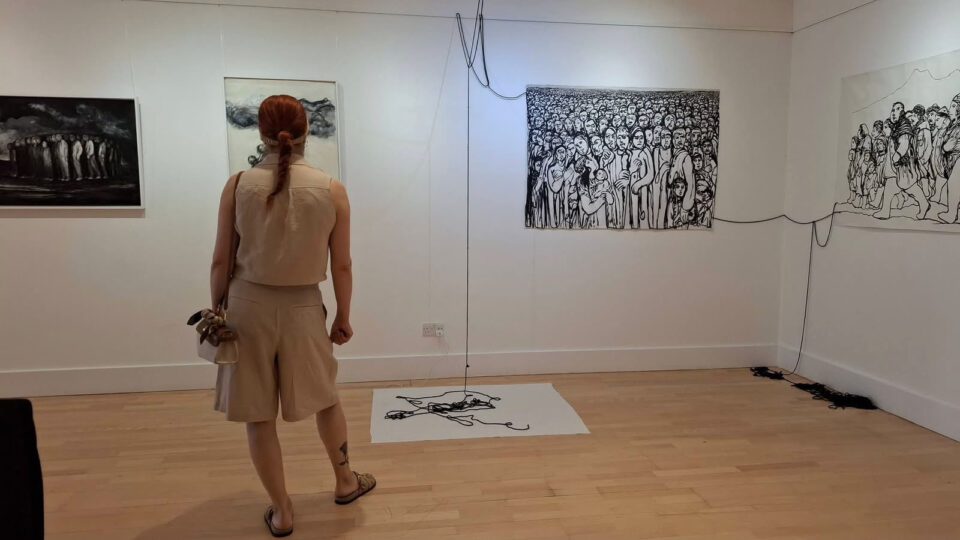
Kurdish visual artist Osman Ahmed has opened his latest exhibition, “Darkness of Anfal,” at the New Millennium Gallery in London, using art to commemorate the victims of the 1988 Anfal genocide and preserve the collective memory of one of the darkest chapters in Kurdish history.
The four-day exhibition presents a series of paintings documenting the human impact of the Anfal campaign through symbolism, colour, and visual storytelling. Rather than depicting graphic scenes, Ahmed’s works explore themes of loss, fear, displacement, and resilience, inviting viewers to reflect on the experiences of families affected by the genocide.
Speaking about the exhibition, Ahmed said each painting seeks to recount part of the Anfal tragedy through the language of art, conveying emotions and memories that often cannot be expressed through words alone. The works portray destroyed villages, forced displacement, mass graves, and the enduring grief carried by survivors and the families of the victims.
Ahmed said the exhibition is intended not only as an artistic presentation but also as a visual archive that preserves historical memory and reminds future generations of the importance of documenting crimes against humanity. He stressed that remembering the past is essential to preventing such atrocities from being repeated and to advancing justice and recognition for the victims.
Each painting, he added, serves as artistic testimony, reflecting the lives interrupted by the Anfal campaign and honouring the memory of those who were killed or disappeared.
Born in Sulaymaniyah in 1962, Ahmed is himself a survivor of the Anfal genocide. Motivated by what he describes as the limited documentation of the tragedy, he has dedicated much of his artistic career to portraying its human consequences through visual art, creating works that preserve the memories of survivors and the enduring legacy of the genocide.