
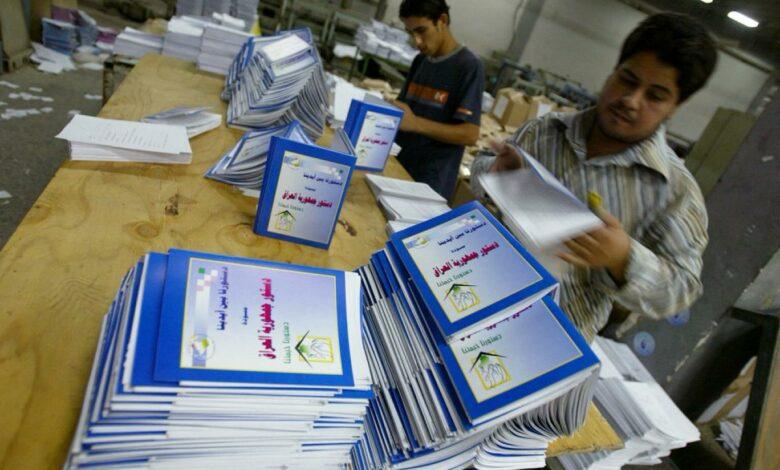
BAGHDAD — Twenty-one years after Iraqis approved their permanent constitution, the question of rewriting parts of it is back at the center of national politics, revived this time not by protesters or party leaders but by the head of the judiciary.
In a statement marking the October 15 anniversary of the 2005 referendum, Faiq Zaidan, president of the Supreme Judicial Council, urged parliament to review the charter and amend provisions that experience had shown to be flawed. Lawmakers, he said, bear a “national and historical responsibility” to act through the procedures the constitution itself prescribes.
Zaidan pointed to three recurring sources of paralysis: the parliamentary majorities required for key votes, the mechanism for electing the president, and the definition of the “largest parliamentary bloc” entitled to nominate a prime minister. Respecting the constitution, he argued, does not rule out updating a text drafted in tense transitional conditions.
A Familiar Deadlock, a Divided Response
The timing reflects recent experience. After the November 2025 elections, parliament needed five months to choose a president because the constitution demands a two-thirds majority; Nizar Amedi was elected only in April. Lawmakers completed Prime Minister Ali al-Zaidi’s cabinet just this month.
The “largest bloc” dispute is older. In 2010, Ayad Allawi’s Iraqiya list won 91 seats to Nouri al-Maliki’s 89, but the Federal Supreme Court ruled that an alliance formed after the vote could qualify, clearing Maliki’s path to a second term. In 2022, a ruling requiring a two-thirds quorum to elect the president let Muqtada al-Sadr’s rivals block his bid for a majority government, prolonging a year-long standoff.
Reactions have split along familiar lines. Badr bloc MP Shakir al-Tamimi welcomed the call, as did Thaer al-Kaabi of parliament’s legal committee and Bahaa al-Araji of the Reconstruction and Development coalition.
Kurdish politicians were warier. Ashwaq Jaff, a Kurdistan Democratic Party central council member, said Kurdish parties must “closely scrutinize” any wording touching the balance between Baghdad and Erbil. Harem Kamal Agha, head of the Patriotic Union of Kurdistan bloc, noted that no formal proposal has reached parliament, while KDP lawmaker Salwan Akreyi called the timing unsuitable. Yazidi MP Murad Ismail argued Iraq should first implement neglected provisions such as Article 140 on disputed territories.
That caution has sharpened since October 13, when the Federal Supreme Court struck down a 2003 Kurdistan Region security law, the latest in a series of rulings voiding regional legislation.
Why Change Has Proven So Elusive
History offers little encouragement. Article 142, a 2005 compromise to secure Sunni participation in the referendum, required parliament to form a review committee. Created in 2006, it eventually proposed changes to about 50 articles, but the package never went to voters. A committee formed in 2019 under pressure from mass protests also produced nothing.
The bar is high by design. Under Article 142, amendments need an absolute parliamentary majority and a referendum, but fail if two-thirds of voters in three or more provinces reject them, a de facto veto that Kurds and Sunni Arabs regard as a safeguard. Article 126, the general route, requires a two-thirds parliamentary vote and bars curbing a region’s powers without its consent. Even which track applies is contested.
The deeper obstacle is political, because every technical fix redistributes leverage. Defining the largest bloc as the top vote-winner worries some Shia parties, analysts say, since a list from outside their community could one day finish first. Lowering two-thirds thresholds would weaken the blocking minority that Kurds and rival factions have relied on. And Kurds fear that reopening the text invites long-standing demands to scrap Article 140 or centralize control of oil and gas.
Many argue the problem lies less in the text than in its non-implementation. The Federation Council, a second chamber required by Article 65, has never been created; a federal oil and gas law remains unpassed; Article 140’s 2007 deadline came and went.
Skeptics also note the limits of Zaidan’s role. Judge Wael Abdul Latif, one of the constitution’s drafters, said the appeal carries no binding force and that amendment is parliament’s business alone.
For now, broad rhetorical support masks deep disagreement over what to change. The real test is whether any bloc turns Zaidan’s appeal into a formal proposal, and whether Iraq’s communities can agree on reforms that end the deadlocks without unravelling the bargains that hold the federal system together.
By Jawad Qadir