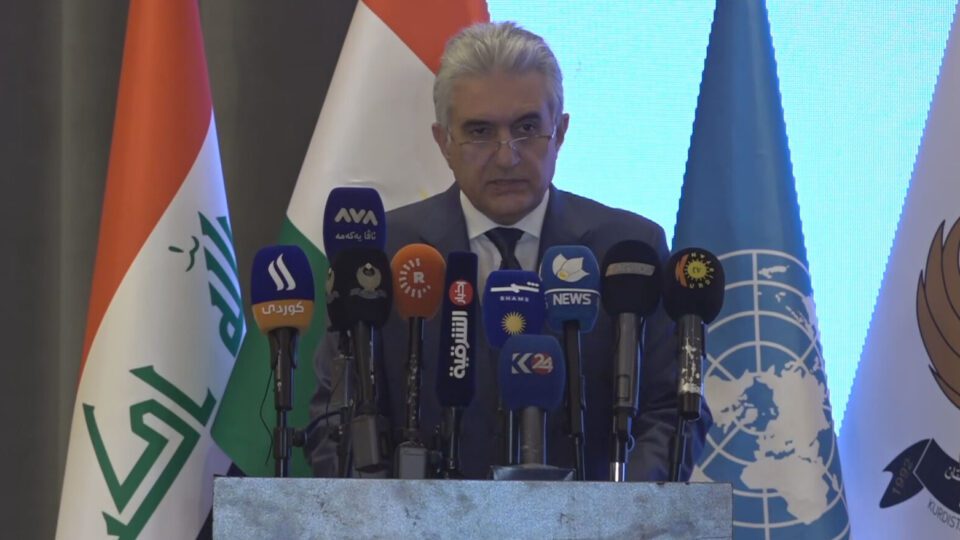
The Kurdistan Regional Government (KRG) has moved its police reform process into a new operational phase, focusing on restructuring police academies, establishing model police stations and strengthening the role of women in the police force.
The latest developments were reviewed at a meeting chaired by KRG Interior Minister Rebar Ahmed, marking one year since the activation of the police reform committee, according to the Ministry of Interior.
The meeting focused on moving the reform process beyond planning and consultation toward practical implementation. Two main priorities were discussed: reforming the curricula and organizational structures of police academies in Erbil and Sulaymaniyah, and launching four model police stations across the Kurdistan Region’s four governorates.
The ministry said the initiatives are intended to improve police professionalism, strengthen institutional capacity and enhance public services.
Ahmed emphasized the importance of ensuring women continue to play an active role in the Kurdistan police force. He called for appropriate opportunities to enable women to demonstrate their abilities and take on greater responsibilities within the internal security forces.
The reform process is being developed in cooperation with the United Nations Development Programme (UNDP) and the European Union Advisory Mission (EUAM). Ahmed said the goal is to establish a modern, professional police institution that operates under the rule of law and earns public trust.
He described police reform as a key part of the KRG’s ninth cabinet’s reform agenda, led by Prime Minister Masrour Barzani. He also stressed the need to turn policy commitments into practical improvements that citizens can see in their daily lives.
The first phase includes the establishment of model police stations and the transformation of police colleges into modern academies based on merit and scientific principles. The changes are intended to strengthen professional standards, improve police conduct and raise the quality of services provided to the public.
As another step in the reform process, the Ministry of Interior approved the Investigative Boards Manual. The manual is intended to standardize investigative procedures across the Region’s internal security forces and establish a more consistent framework for handling investigations.
The ministry said directives and recommendations had been issued to the relevant committees to accelerate implementation of the reform plans.
The initiative aims to strengthen the police institution through improved training, clearer procedures and greater accountability, with the broader goal of building public confidence in law enforcement across the Kurdistan Region.