
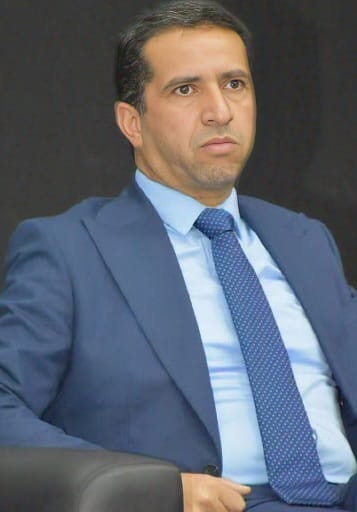
Dr. Hiwa M. Khalil
Two decades have passed since October 15, 2005, when approximately 5.9 million Iraqi voters—representing 79% of participants—ratified the country’s permanent constitution. Drafted during a deeply polarized post-invasion transition, the charter was adopted largely in the absence of the Sunni Arab community, yet it stood as a foundational milestone. For the Kurdistan Region, the document served as the supreme legal guarantor of its self-governance within a federal, democratic, and republican Iraq.
Yet, 21 years on, the core promise of the constitution remains unfulfilled, hampered by chronic non-implementation. Despite this legacy of legislative neglect, Faiq Zaidan, President of Iraq’s Supreme Judicial Council, has recently called upon Parliament to reopen the text for comprehensive amendments. This proposal forces a critical re-examination of Iraq’s power-sharing architecture and the future of its ethnic and sectarian components.
The Changing Political Landscape
The Iraqi Constitution was drafted during a critical transitional phase. Shia political forces had newly assumed power after decades of marginalization; the Sunni community had held sway over the state from its founding in 1921 until the fall of the Ba’ath regime; and the Kurdistan Region had successfully maintained its self-governance experience since 1991.
Today, with Shia parties having held power for over two decades—during which they have accumulated significant governance experience while frequently failing to adhere to the very constitution they helped draft—key questions arise. Can a constitutional amendment realistically guarantee expanded rights for Kurds, Sunni Arabs, and other Iraqi components?
When the current constitution was written, it heavily relied on the 2004 Transitional Administrative Law crafted under the oversight of the United States and coalition forces. The geopolitical reality today is vastly different: neither the U.S. nor coalition forces hold the same physical footprint or leverage. Instead, Iran exerts substantial influence over the government and Shia political parties, alongside a notable Turkish footprint in Iraqi affairs. Under these conditions, one must question whether an amendment process can secure enhanced political, economic, civil, military, and cultural rights for the Kurds within a federal framework.
While Sunni factions have expressed support for constitutional amendments, they simultaneously remain opposed to the federal system itself. Similarly, following the Tishreen protests of 2019, Shia forces established a committee to explore constitutional amendments, but the initiative stalled due to a lack of intra-Shia political consensus.
Key Questions for the Kurdistan Region
If Iraq moves forward with constitutional amendments, the Kurdistan Region will face a series of critical questions that demand immediate preparation:
1. The Future of Federalism: What will the structure and nature of the federal system look like in a future Iraq?
2. The Federation Council: What will become of the Federation Council, mandated by the constitution but never actually established?
3. Article 140: What is the fate of Article 140 concerning disputed territories, implementation of which has long been blocked by Shia leaders?
4. Federal vs. Regional Powers: What changes will be imposed on the constitutional boundaries of the Kurdistan Region’s authorities?
5. The Oil and Gas Law: How will the management and revenue of natural resources be ultimately resolved?
6. The Status of the Peshmerga: How will Peshmerga forces—recognized in the current constitution as part of the regional border guard—be legally redefined?
7. The Constitutional Veto: Will the constitutional veto power of the components, one of the most critical achievements for the Kurds in the current text, remain intact?
Strategic Imperatives for the Kurds
These questions and grievances represent immediate challenges that the Kurdistan Region must prepare for, as the current constitution will inevitably be amended sooner or later.
To safeguard its political future, one of the most strategic steps the Kurdistan Region can take is to reactivate its parliament and finalize the drafting and ratification of its own Kurdistan Region Constitution. Because a revised Iraqi constitution carries the risk of rolling back the regional government’s political and administrative powers, possessing a codified regional constitution can serve as a vital domestic legal shield against federal overreach.