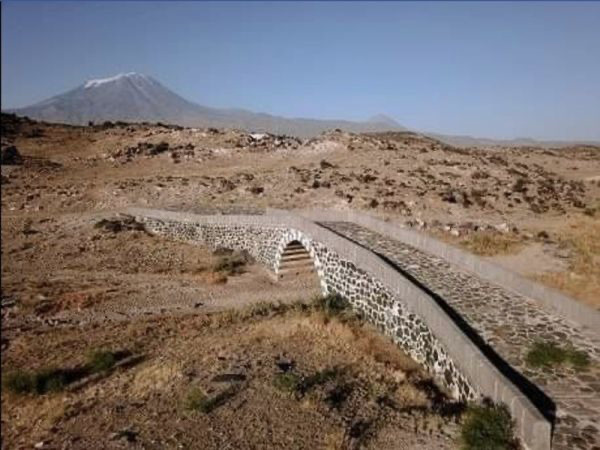
Standing as one of the most remarkable historical monuments in the Bayezid region of northern Kurdistan, Belek Bridge continues to symbolize the architectural skill, engineering expertise, and cultural heritage of the Kurdish principalities. The bridge, also known as Bayezid Bridge, has endured for centuries and remains a testament to the ingenuity of Kurdish builders and craftsmen.
Constructed from carefully carved natural stone, the bridge was designed using advanced engineering techniques of its time. Its large stone arches not only create a distinctive architectural appearance but also provide the structural strength necessary to withstand floods, changing weather conditions, and the passage of time. The use of locally sourced materials demonstrates the deep understanding Kurdish architects had of their environment and available resources.
Historically, the Bayezid region occupied an important position along trade and transportation routes connecting different parts of Kurdistan and neighboring regions. Belek Bridge played a vital role in facilitating the movement of merchants, travelers, and caravans, serving as an essential link between towns and villages under the authority of the Kurdish principalities.
The existence of such a significant public structure reflects the economic stability and administrative capacity of the period. The construction and maintenance of major infrastructure projects required considerable resources and organization, highlighting the importance placed on public services and economic development by Kurdish rulers.
Beyond its practical function, Belek Bridge also served as a cultural gateway. Travelers crossing the bridge carried ideas, traditions, languages, and customs from one region to another, helping to strengthen cultural exchange and communication. In this sense, the bridge became more than a transportation route; it became a meeting point between different communities and cultures.
Today, Belek Bridge remains an important part of Kurdistan’s historical heritage. Surrounded by the natural beauty of the Bayezid region, it possesses significant cultural and tourism value. Historians and heritage experts continue to emphasize the need to preserve and restore such monuments to ensure that future generations can appreciate their historical and architectural significance.
As a lasting symbol of Kurdish civilization, Belek Bridge stands as a reminder of a rich history marked by engineering achievement, cultural exchange, and enduring connections between people and places.