
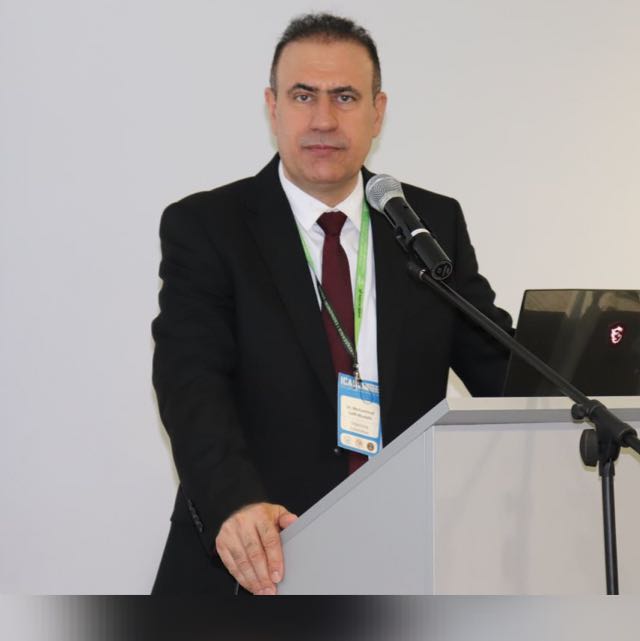
By Dr. Mohammad Salih Mustafa
The past few months’ evets showed that in the tumultuous and emerging Middle East, only the regional actors that they contribute to the stability of the Middle East have chance of survive. In relations to the Kurdistan Region and its role in the major events that started with the regime change in Syria, and continued with the peace process in Turkey and the recent war on Iran, Kurdistan Region was at a crossroad. Initially and in the past few years, Iran had a reactionist stance towards Kurdistan Region, and was accusing the region of being a hub of anti-Iranian intelligence activities. Accordingly, Iran was occasionally attacking the region with missiles. Therefore, Iran was expecting the Kurdistan Region (KR) to be the springboard for an imminent attack on it. Similarly, for a similar kind of past experience, the new Syrian Regime was expecting Kurdistan Region to have a hostile position against it, while instability was facing the country post the regime change.
However, the Kurdistan Regional Government (KRG) and its political parties, not only did not behave irrational that would lead to later resentment by not only the two mentioned countries, then Turkey too, but also contrary to what they were expecting, the Kurdistan Region showed its contribution into pacifying the entire region for the sake of the region, the Kurds in Syria, Turkey and Iran, and the stability of the three countries too. The region’s standpoint towards what happened, and its position, did not only prove that it has only been a source for the stability of the wider region of the Middle East, but also proved to all the contesting parties, including US and Israel that the only way forward is through a good faith and constructive peace. Thus, the role of Kurdistan Region despite fundamental changes in the politics of the Middle East was in favour of stability and demonstrated that the Kurdish issue in the wider Kurdistan can help and contribute to the stability of the entire Middle Eastern states, including the four countries that Kurdistan is divided onto.
Thus, the Kurdish issue as a whole still has potential for further development on the basis of the similar regional policies of the KR. Yet, in the worst-case scenario, the Kurdish question remains the number one issue of the wider Middle East and the Kurds are going to be the main players in the four countries of Iraq, Iran, Turkey and Syrian in any escalated scenarios. For that, it is wise for all relevant parties, including the four courtiers to sincerely contain the Kurdish issue in a way that leads to convincing Kurds in their countries, and give no chance for utilisation of the Kurdish issue against them.
Nonetheless, the most challenging point is the intra Kurdish politics in each part of Kurdistan, with the KRG and struggle for power of its main political parties, being the exemplified model for the Kurds in all other parts of Kurdistan. For that reason, it is the duty of both Kurdistan Democratic Party (KDP) and Patriotic Union of Kurdistan (PUK) to soon get well with each other and no further delay in the formation of the next KRG Cabinet. It is crucial that KDP understands the kind of frustration of the PUK and to show a softer political stance, because PUK feels that it has become the victim of its strategic partnership with the KPD in the past. Consequently, that cost it a lot. Therefore, under its new president, PUK has determined to regrow through showing a rigid stance towards KDP in the next cabinet formation and administration.
In this way, the PUK wants to re-contain the much political resentment that in the past led to fragmentation of its organisations, and foundation of few new political parties at its cost. Working with PUK, for the KDP is not only for the sake of survival of Kurdistan Region, but it is also for the sake of the wider Kurdistan. It has already been long that the success of KR is boosting the Kurdish cause in other parts of Kurdistan, and its failure too, would cost them hugely.