
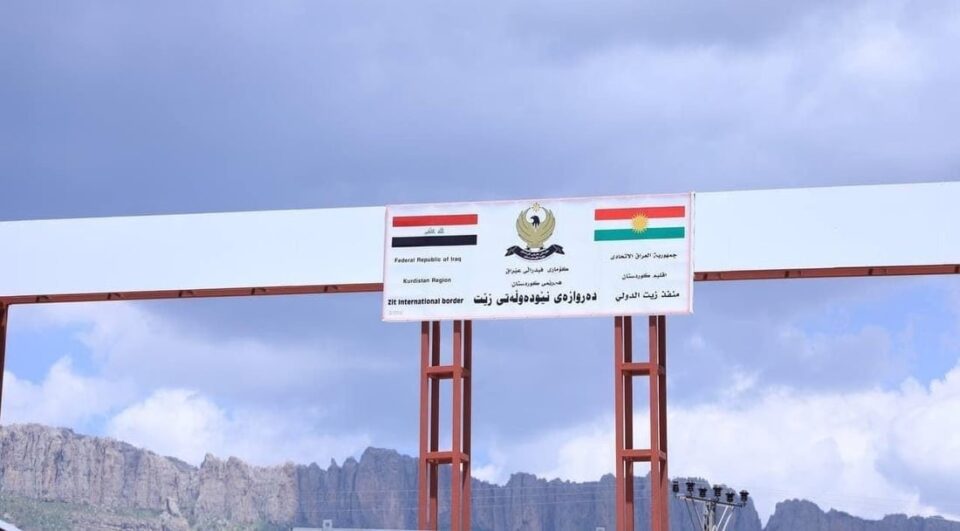
Customs coordination talks continue with Baghdad over implementation and authority.
The recent experience of agreements between the Kurdistan Regional Government (KRG) and the Iraqi Federal Government has once again highlighted persistent challenges in implementing federal arrangements, particularly in the area of customs administration.
Over recent years, Baghdad has repeatedly attempted to pursue centralised approaches in its dealings with the Kurdistan Region, often without full adherence to previously agreed frameworks or federal provisions. The latest example of this tension emerged around the implementation of the ASYCUDA customs system, which ultimately failed to be imposed in the Kurdistan Region.
From the outset of discussions on customs unification, the KRG maintained that it would not relinquish its constitutional rights, instead insisting that any system must be implemented within the framework of Iraq’s federal constitution.
According to reports, the Iraqi government recently began rolling out the ASYCUDA system without full coordination with the Kurdistan Region, despite the system being widely considered a modern and beneficial tool for customs management. However, Kurdish officials rejected its unilateral implementation, arguing that it did not take into account the Region’s constitutional status and rights.
The dispute, at its core, revolved around concerns that the system would centralise control over border revenues and trade mechanisms under Baghdad. This raised objections in Erbil, where authorities emphasised that while the Kurdistan Region is part of the federal Iraqi state, it also retains constitutionally defined administrative and financial competencies.
Economic consequences also emerged as part of the broader dispute. Merchants in the Kurdistan Region were reportedly affected by currency and import-related complications, including difficulties in accessing dollars at official rates, forcing many to rely on higher market exchange rates and contributing to increased import costs and higher consumer prices.
Further tensions arose when Baghdad introduced requirements that restricted the movement of imported goods into federal Iraq without ASYCUDA registration codes, effectively obliging Kurdistan-based traders to register directly with federal authorities. The KRG rejected this approach, viewing it as an encroachment on its institutional authority.
The system was implemented in parts of southern Iraq, where it reportedly contributed to higher taxation and rising commodity prices, in some cases leading to public protests.
However, shifting regional conditions and Iraq’s broader trade and energy challenges eventually led to greater flexibility from Baghdad. The Kurdistan Region’s role in facilitating oil exports and serving as a key trade corridor further underscored its economic importance within Iraq’s broader system.
Following this, both sides entered renewed negotiations. A joint meeting was held involving officials from the Federal Customs Authority, the KRG Customs Directorate and its deputy, an advisor to the KRG Interior Minister, the legal department of the Federal Customs Authority, and experts from UNCTAD. The talks focused on the draft framework for implementing electronic customs procedures in the Kurdistan Region.
The meeting concluded with an agreement to identify and address legal points of disagreement between the two sides in order to improve coordination. It was also decided that relevant companies in the Kurdistan Region would form a regional ASYCUDA team to integrate into the national system, with responsibilities and authorities clearly defined to ensure smoother implementation.