
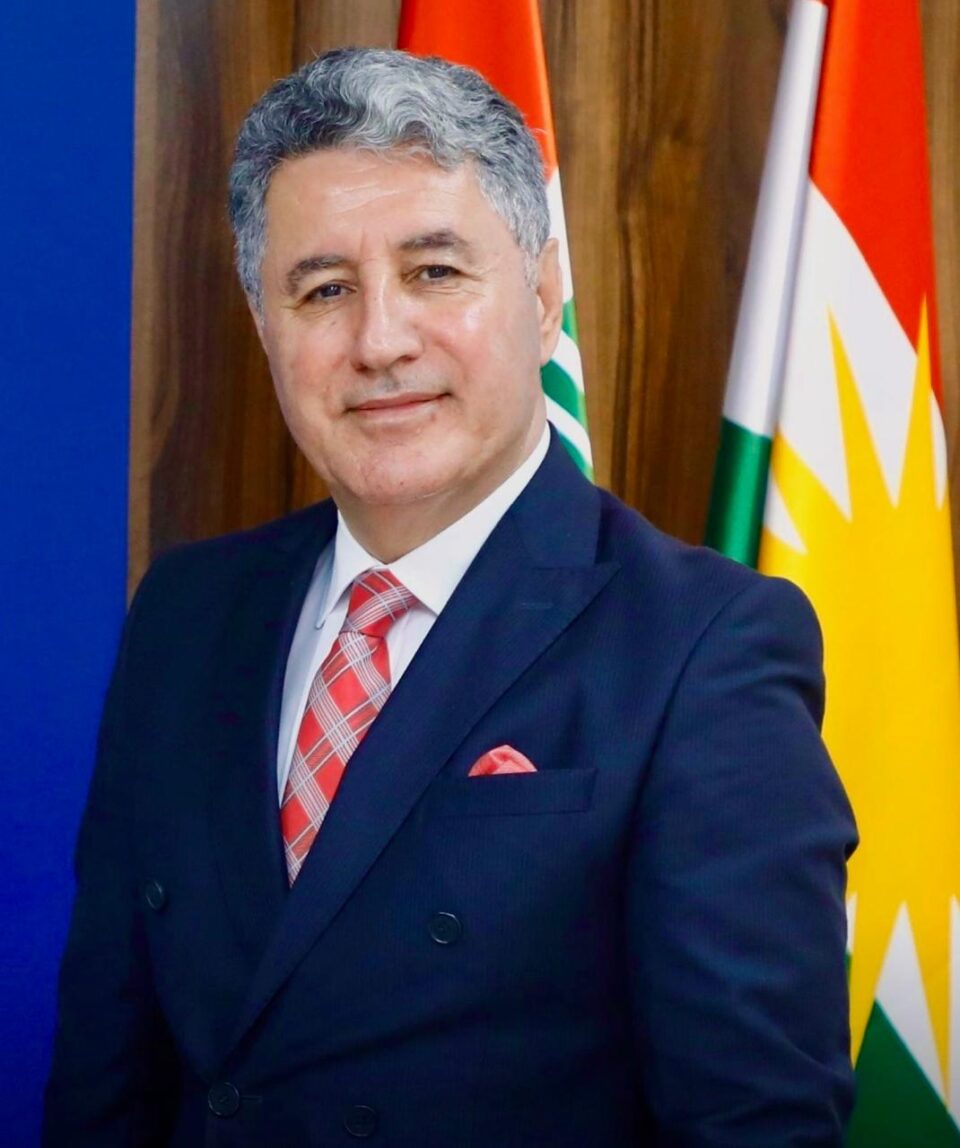
Dr. Saman Sorani *
In political philosophy, the world is an arena of continuous power struggle and the quest for survival—a system where the fundamental law is solely resilience and the authority of rationality. From this perspective, analyzing the standing of the Kurdistan Region is not merely tracking daily events, but rather understanding the dynamics of those geostrategic equations that determine the fate of entities amidst international anarchy and the reality of power.
From the perspective of neorealist theory, the international system possesses an anarchic structure, wherein states, as primary actors, seek to maximize power accumulation and secure their strategic interests in order to ensure survival and guarantee national security. According to this logic, the level of rapprochement or complication in the political and legal relations between Erbil and Baghdad is primarily the outcome of the dynamic struggle for the balance of power and the structural intervention of regional and international actors.
At the regional level, neighboring powers, particularly Iran and Turkey, pursue a strategy of preventing the emergence of a strong centralized power in Baghdad or an independent and constitutionally robust entity in Erbil. From their viewpoint, the supremacy of either of these two poles would lead to breaching the relative balance of power and altering the geopolitical map of the region. In this regard, regional actors attempt to maintain instability in Erbil-Baghdad relations through instruments such as economic pressure, the use of military cards, and support for non-state actors, because creating an atmosphere of instability provides a conducive environment for activating hegemony and expanding their spheres of influence.
Conversely, the stance of international major powers, specifically the United States of America, is formulated on the basis of preserving regional stability, securing energy security, and sustaining the counter-terrorism alliance. Therefore, Washington’s diplomatic and political pressures for a rapprochement between Erbil and Baghdad fall within the framework of an effort to prevent the collapse of Iraq’s geostrategic value and to mitigate security threats. According to neorealist analysis, these international efforts to forge balance and agreement will continue only up to the point where they directly serve the preservation of the security and geopolitical interests of those major powers.
Within this context, the “Development Road Project,” which Baghdad is striving for, creates a radical transformation in the geopolitical and economic map of Iraq by shifting the country from geostrategic isolation to a transit bridge between the Gulf and Europe, moving the economic center of gravity to the Al-Faw Port in southern Iraq. However, this project carries a direct risk of marginalizing the Kurdistan Region’s standing if the route proceeds directly from Basra towards Mosul and the Turkish border (Peshkhabour) without connecting to the Region’s sphere of authority. This marginalization would lead to the Region’s detachment from the international transit network and the depreciation of its geo-economic cards as a primary trade gateway, which in the future will have a negative impact on the Kurdistan Region’s level of economic independence and diplomatic weight.
In light of these rapid and complex transformations in the geopolitical structure of the Middle East, safeguarding the entity of the Kurdistan Region is tied to adopting rationality and a novel philosophy in statecraft. Within this framework, internal integration, the institutionalization of security and defense structures, and the fostering of a solid national consensus are the fundamental responses to external complexities.
The astute diplomacy and profound vision of the Prime Minister, Masrour Barzani, in the Ninth Cabinet reflect a continuous rational endeavor to fortify the Region’s constitutional standing. This process has materialized through a national roadmap for diversifying revenue sources and liberating the economic infrastructure from its one-dimensional reliance on the oil sector. Developing the foundations of the agricultural sector, generating a digital and technological revolution, revitalizing industrial and tourism resources, and attracting foreign investment in the energy and construction sectors were proactive and strategic decisions. These are aimed at linking the Region’s economic partnership to the network of international interests and global corporations, ensuring that maintaining the stability of the Kurdistan Region becomes an integral part of the global economic security architecture.
On the other hand, pursuing an effective constitutional diplomacy towards Baghdad, rather than resorting to tension and direct confrontation, secures suitable grounds for genuine presence in the main nodes of national decision-making. At the regional level as well, adopting a smart neutrality, maintaining equilibrium in relations with neighboring countries, and forging strategic alliances with the Arab community and regional states act as a protective belt to safeguard the constitutional standing of the Kurdistan Region within regional and international equations.
Therefore, from a neorealist perspective, in a world that only believes in power, rights and promises alone are not protected. The greatest victory for the Kurdistan Region lies in strengthening its position in such a way that no party can easily marginalize it.
In our view, for the Region to remain protected and function as a decision-maker amidst the complexities, it is imperative to continuously strengthen the domestic economy, unify its ranks, and utilize its geographic position rationally, because ultimately, only internal strength and resilience are the true guarantors of survival.
* Senior Advisor and Head of the Center for Diplomatic Training at the Department of Foreign Relations