
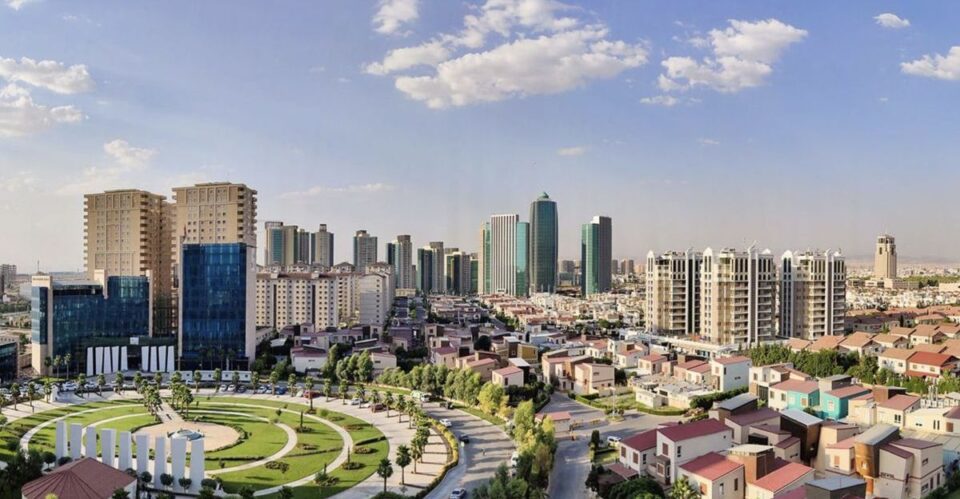
Over the past two decades, the Kurdistan Region has undergone one of the most dramatic demographic transformations in its modern history. The movement of people from countryside to city — driven by historical trauma, economic opportunity, and repeated waves of conflict — is today measurable with greater precision than ever before, following the region’s first comprehensive census in nearly four decades.
The 2024 Census: Kurdistan as a Predominantly Urban Region
On 20 November 2024, the federal government of Iraq and the Kurdistan Regional Government jointly conducted a national census — the first to fully include the Kurdistan Region since 1987. Dr. Dara Rashid, Minister of Planning in the Kurdistan Regional Government, announced that the Kurdistan Region’s population has reached over 6.37 million people. A total of 1,379,163 households were registered, with an average family size of approximately 4.6 persons and a population growth rate of 2.8%.
The most striking finding was the urban-rural split: around 84% of inhabitants reside in urban areas, while 16% live in rural areas. This places Kurdistan far ahead of the rest of Iraq in urbanisation — of the 39.6 million people living outside the Kurdistan Region, 68% are urban residents. Urbanisation rates vary across governorates: Erbil stands at 83%, Duhok at 74%, and Sulaymaniyah at 85%.
In a notable demographic shift, Erbil has overtaken Sulaymaniyah for the first time. Erbil governorate recorded a population of 2,517,534, surpassing the combined population of Sulaymaniyah and Halabja — a reversal of a long-standing pattern.
A History of Transformation
The Kurdistan Region once had one of the highest proportions of rural population in Iraq, with communities deeply rooted in its mountain valleys and agricultural plains. A series of political and economic shocks dismantled that reality.
Rural spaces were largely depopulated, agrarian lands became overgrown, and mountainous areas were deforested. The Anfal campaign (1986–1989), involving the systematic destruction of Kurdish villages, caused acute depopulation — with estimates suggesting hundreds of thousands killed or displaced — halting natural demographic trends and driving a refugee exodus to Iran and Turkey.
After 1991 and the establishment of the protected zone, a slow process of return began. Following the 2003 US-led invasion of Iraq, Kurdish people who had been displaced returned in significant numbers. By 2005, estimates indicated over 400,000 Kurds had returned from southern Iraq and exile, contributing to urban growth in cities like Erbil and Sulaymaniyah.
Strong economic growth followed the 2003 invasion — between 2003 and 2006, the number of millionaires in Sulaymaniyah alone grew from 12 to 2,000. This boom had a direct effect on urbanisation, with the urban population rising from approximately 70% in 2010 to over 80% by 2020, driven by agricultural decline and job prospects in the services and oil sectors.
Particularly since 2003, the Kurdistan Region has seen a shift from ecological agriculture toward industrial farming and market-driven profit. Land privatisation, rural depopulation, and a rentier economic system reliant on oil production have weakened village autonomy and increased dependence on imported food.
The rise of the Islamic State in 2014 triggered yet another wave of displacement. By 2016, the region hosted approximately 1.1 million internally displaced persons, representing 16% of the total Kurdistan Region population. Many settled in urban areas rather than rural ones, deepening the imbalance further. Field research found that many people who had returned to rural areas during reconstruction programmes were eager to move back to cities — mainly for better access to education and healthcare — but were unable to do so due to a lack of affordable housing.
The Demographic Future: Pressures on Cities, Silence in the Villages
Today’s figures point to a process of urbanisation that shows no sign of reversing. Population projections estimate that the Kurdistan Region’s population will reach approximately 7 million by 2027 and 8 million by 2034 — a projected 43% increase over two decades.
This growth places ever-greater strain on urban services. The ongoing trend of urbanisation indicates an increased demand for housing, transportation, and public services, requiring urgent government attention to manage city growth and prevent overcrowding.
Meanwhile, rural Kurdistan faces a quieter crisis. Rural areas, primarily in mountainous terrain, sustain smaller communities focused on farming and herding, but face depopulation due to limited services and youth out-migration, with population densities remaining below 50 persons per square kilometre in remote zones.
The data produced by the 2024 census provides, for the first time in the region’s modern history, a reliable statistical foundation for demographic policy — covering urban planning, rural investment, and budget distribution between Baghdad and Erbil. The census results will shift Kurdistan’s share of the national budget from a disputed 12.6% to 14% in upcoming budgets.
Whether policymakers act on this data to address the rural-urban divide will determine whether the villages that survived war and displacement can also survive prosperity.
By Jawad Qadir