
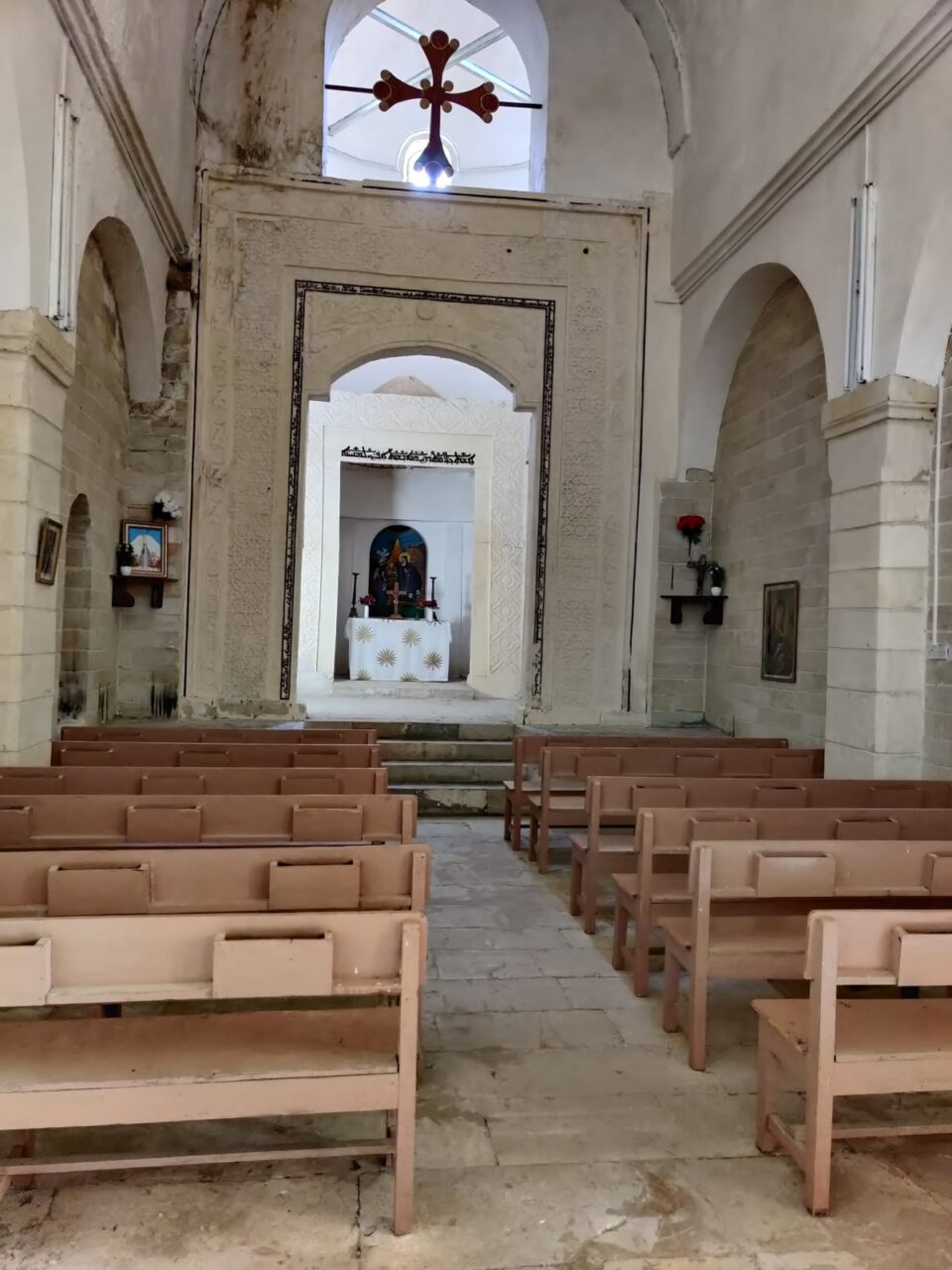
The Kurdistan Region is home to more than 50 religious archaeological sites and shrines suitable for the development of religious tourism. However, until now, we have not been able to utilize or market them in an organized manner. Some of these sites are protected or renovated by religious institutions and the Regional Government, making them suitable for tourists. In recent years, I have traveled to several of these sacred archaeological sites. One of the most fascinating places I have visited twice is the Rabban Hormizd Christian Monastery in the Alqosh Mountains.
Geographical Location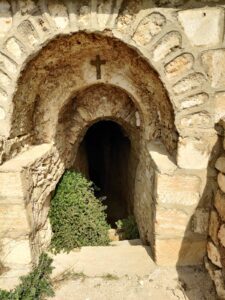
The Rabban Hormizd Monastery is artistically and precisely built into the side of the Alqosh Mountain. It is located in the Alqosh sub-district on the Erbil-Duhok road, in the northern part of the Mosul Governorate. The building faces south, overlooking a semi-deep valley. A winding paved road leads cars into the monastery complex. Along the road, one can see numerous carvings, artistic murals, small caves, and springs. Rabban Hormizd is 2 km from Alqosh, 145 km from Erbil, 45 km from Duhok, 22 km from Shekhan, and 46 km from Mosul. Administratively, it belongs to the Mosul Governorate, but it is protected by the Kurdistan Peshmerga forces. Situated at an altitude of 700 meters above sea level, it sits on the slopes of the Alqosh Mountain within the Ba’adre mountain range, which extends from the Shekhan district toward Alqosh and Faida. The mountain lies on the border between the Duhok and Mosul governorates.
Structure of the Monastery
Rabban Hormizd Monastery has been a place of worship and the advancement of the Christian faith for over 1,500 years. It consists of a religious ceremonial hall, numerous prayer and service rooms, corridors, alleys, caves, springs, mountain-carved rooms, temples, and stone stairs for climbing and descending. Some of the tunnels and basements in the lower part of the monastery, which have become archaeological relics, are astonishing and filled with stories of worship and isolation from the outside world. The upper section has mostly been renovated with a modern design. There is a water well in the upper part, while the lower part contains a medicinal spring regarded as holy.
Main Sections of the Hormizd Monastery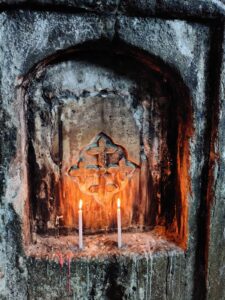
1. The Caves: The monastery consists of hundreds of small caves carved directly into the mountain. These were used by monks as living quarters, places of worship, and for spiritual seclusion. The caves are organized with beautiful engineering.
2. The Main Church: This is the heart of the monastery used for prayers and religious ceremonies. This section is carved into the rocks and mountains in an ancient and attractive architectural style, featuring various religious motifs and crosses.
3. The Shrine of the Patriarchs: A special area within the monastery containing the graves of Rabban Hormizd and nine Patriarchs of the Church of the East, who were buried there between the 15th and 19th centuries. This holds great historical significance for the monastery.
4. Rabban Hormizd’s Seclusion Room: A specific and important room where the founder of the monastery, Rabban Hormizd, lived and spent his time in worship.
5. Wells and Water Sources: Because the monastery is located in a high, mountainous area, it utilized a precise system for collecting rainwater. Small reservoirs and channels were carved into the stone to store water for the monks’ daily use. Along the path up, there is the “Saint’s Spring,” accessible via an underground door, though it dries up in some years.
6. Halls and Corridors: The monastery is not just a single room; it is a network of narrow corridors and stone stairs that connect the different sections and caves, especially the ancient part of the monastery located as a basement behind the church.
The New Monastery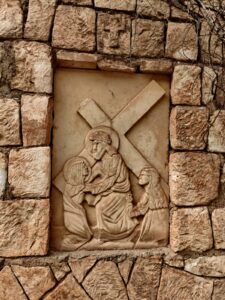
Below the ancient monastery at the foot of the mountain, a newer monastery was built called “Al-Sayyida” (Our Lady) Monastery. It was constructed in 1858, and today most ceremonies and monastic life take place there, while the ancient Rabban Hormizd site remains a sacred and historical landmark.
History of the Hormizd Monastery
Although my focus is not on history but rather a descriptive field report, I will briefly mention its historical background. The history of the area dates back to the Assyrian and Zoroastrian eras. Some sources suggest that the caves were originally Zoroastrian temples before being converted into a monastery. Given that the tomb of the Prophet Nahum is nearby, some also believe it was once a Jewish place of worship. The monastery was established during the time of Mar Rabban Hormizd in 640 AD. It is the most famous monastery in Iraq and the Middle East, serving as a primary center for the “Church of the East” for over a thousand years. Currently, the monastery is managed by the Chaldean Church, though Assyrians view it as a part of their golden history. Before the church split into Assyrian and Chaldean branches, it was the holiest site for all Christians in the region. It has produced many high-ranking religious figures and linguists. The site has faced destruction and fire several times, particularly during the Mongol and Ottoman eras, and during the campaigns of Nadir Shah and Mir Muhammad (the Prince of Soran). After each destruction, it was renovated to continue its religious mission.
Relationship Between Kurds and the Hormizd Monastery
The relationship between the Rabban Hormizd Monastery and the Kurdish people has a long history, representing a blend of coexistence and cultural influence between two indigenous components of the region linked by history and geography. Throughout history, this monastery and the surrounding Christian villages have been neighbors to Kurdish areas, with constant interaction between Kurds, the monks, and the local population. In many historical stages, when Christians faced external attacks, the mountains of Kurdistan and Kurdish areas served as a refuge and protection. Furthermore, many Kurdish princes and tribal chiefs held special respect for the monastery and its sanctity. Every year, thousands of Kurdish tourists from Erbil, Duhok, and Sulaymaniyah visit the monastery, viewing it as a historical and national landmark. The Peshmerga forces played a vital role in protecting Alqosh and the monastery from ISIS threats, creating a new bond based on “shared defense.” Today, the graves of six Peshmerga soldiers who were martyred defending the site are located just below the monastery.
Tourism Perspective
Rabban Hormizd is considered a historical, religious, and tourist site. Every year, a number of tourists visit it, especially foreigners, but the numbers are not as high as they should be, and there is a lack of organized tourism services. Unfortunately, during my visit, there was no expert or guide at the monastery or church to provide more information. Some sections were locked and could not be seen. It is necessary for tourists to contact the Alqosh administration during their trips to arrange for a guide so they can enjoy exploring all parts of the site.
By: Nadir Rosti