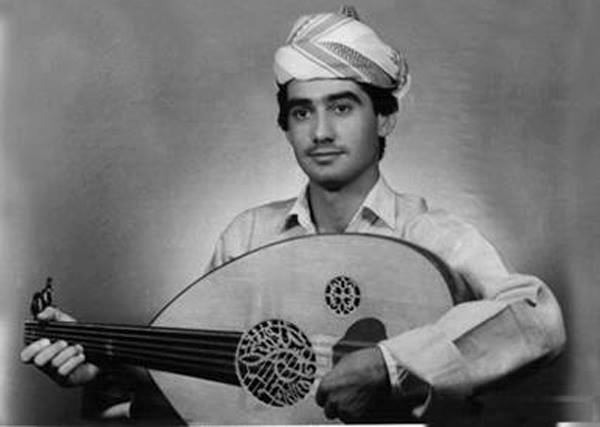
Few voices have left as lasting an imprint on Kurdish music as Eyaz Zaxoyi, whose songs continue to resonate with audiences decades after his death. Renowned for his emotional performances and patriotic spirit, he remains one of the most influential figures in Kurdish music.
Born Eyaz Yusuf Ahmad in 1961 in Zakho, he completed his primary and intermediate education at Ahmadi Khani School in Badirxan before attending Zakho Agricultural High School. Like many young men of his generation, he was later drafted into compulsory military service in Baghdad.
Eyaz discovered his passion for music at an early age, performing patriotic songs and school anthems. In 1970, he began singing at family celebrations and social gatherings, often without his father’s knowledge, as his family did not initially support his musical ambitions. Following his father’s death in 1977, he pursued music more openly.
That same year, he gained widespread recognition after winning first place at Iraq’s Rabie (Spring) Festival in Mosul with his performance of “Negri Negri”, originally sung by Bashar Zaxoyi.
His professional career began in 1980 when poet and composer Abdulaziz Sulayman wrote his first original song. Two years later, with the support of poet and broadcaster Sagvan Abdulhakim and artist Samir Zaxoyi, he recorded his first songs at the Kurdish Radio station in Baghdad.
Throughout the early 1980s, Eyaz recorded 33 official songs for Kurdish Radio, many of which became classics across Kurdistan, transcending regional dialects. He later released several cassette albums, collaborated with the Duhok Troupe, recorded at Tomar Studio, and performed memorable duets with Ardawan Zaxoyi.
Over the course of his career, he recorded more than 200 songs, including around 100 original and folkloric works. He was also widely admired for his mastery of traditional Mawal and Hayran singing styles.
Beyond his musical achievements, Eyaz was known for his deep patriotism. Many of his songs celebrated Kurdish identity and inspired both the public and Peshmerga fighters during difficult periods in Kurdish history.
Friends and relatives remember him as a generous and humble man who was devoted to his community. During his military service, he reportedly volunteered to donate blood on numerous occasions in order to receive short leave, allowing him to attend family gatherings and friends’ weddings.
Eyaz Zaxoyi died on January 20, 1986, at the age of 24. His family has long maintained that he was poisoned while serving in the Iraqi military in retaliation for his patriotic songs and his refusal to perform in support of the former Ba’ath regime. While this account has been widely shared by relatives and supporters, it has not been independently verified.
According to his brother, Khairi Zaxoyi, Eyaz requested before his death that his body be carried through the streets of Zakho before being laid to rest in his hometown.
Today, he is buried in Zakho, where a statue stands in his honor. Nearly four decades after his passing, Eyaz Zaxoyi’s voice continues to inspire new generations, securing his place among the greatest icons of Kurdish music.