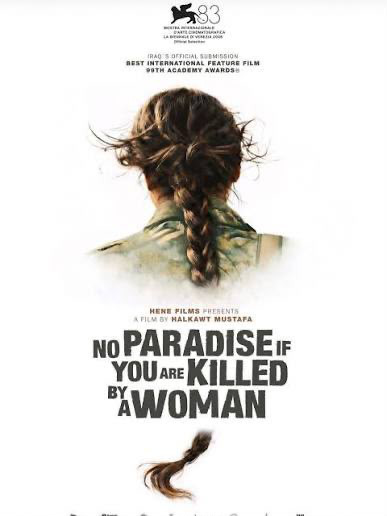
The film “If You Are Killed by the Hands of Women, You Will Not Go to Paradise,” directed by Halkawt Mustafa and regarded as a notable work of Kurdish and regional cinema, has once again attracted attention and sparked discussion.
Some films immediately draw attention to society’s deepest wounds and challenge established intellectual and cultural taboos. Mustafa’s film is one such work. Beyond its cinematic value, it raises questions about the position, power, and image of women in society and invites audiences to engage in broader social and intellectual discussion.
When it was first screened, the film attracted the attention of critics, filmmakers, and researchers. Its impact extended beyond cinema, becoming a starting point for discussions and workshops about patriarchal attitudes toward women’s bodies and lives, as well as the ways religion, culture, and tradition can influence social behaviour.
The film addresses systematic violence against women and examines how society can sometimes give religious or traditional justification to deeply human issues.
The story unfolds through characters who reflect the harsh realities of everyday life. Its dark and cold visual style reinforces the weight of the subject matter, while the music draws viewers deeper into the story and creates an atmosphere of empathy and reflection.
The film also generated debate over the meaning and symbolism of its title. Some viewers praised its psychological depth and artistic construction, while others focused on the questions it raises about women, power, and social norms.
The renewed attention surrounding the film highlights the growing willingness of Kurdish and regional cinema to address sensitive and difficult issues. Films of this kind can play an important role in raising social awareness and creating space for dialogue about women, social justice, and the challenges facing society.
Through its subject matter and artistic approach, “If You Are Killed by the Hands of Women, You Will Not Go to Paradise” remains a film that encourages audiences to question established ideas and look more closely at the relationship between culture, tradition, religion, and social justice.