
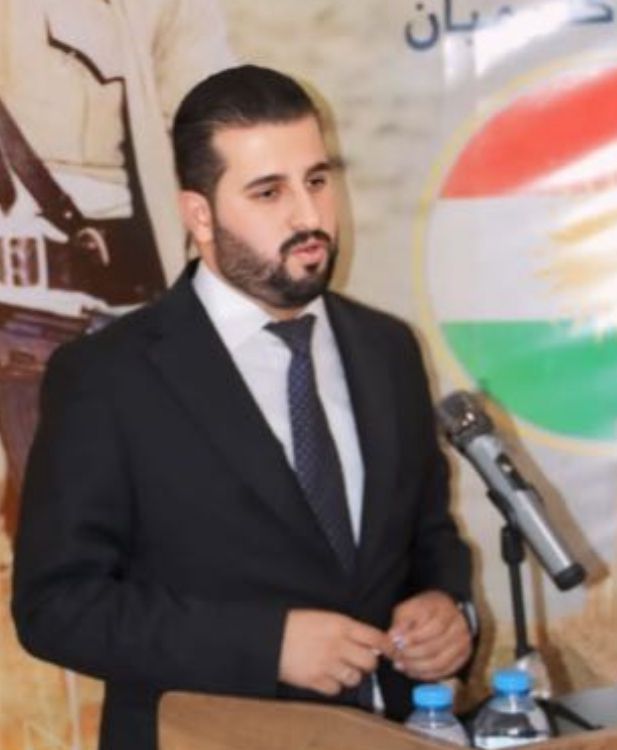
By Frsat Shokr Omer
Introduction
John Kennedy, former President of the United States, said:
“When written in Chinese, the word ‘crisis’ is composed of two characters. One represents danger, and the other represents opportunity.”
Since October 7 of last year, when Hamas and Israel entered a devastating war, the Middle East has passed through a very different, more influential, and sensitive phase than before.
Impact of Developments on Kurdistan Region
Every American plan following militia attacks in the region leads Iraq into a chaotic state filled with tension and prolonged conflict. Alongside, external influences are driven by their own interests. Therefore, the Kurdistan Region must strategically position itself amidst all these alarms and the difficult conditions it faces, in the future Middle East strategically.
At a crucial, sensitive, and decisive stage, what does the Kurdistan Region need?
1. In the name of the Kurdish people, history, and the struggle for Kurdish nationality, all ideological, historical, social, and political differences must be set aside. Kurdish political parties have been divided in many ways, unintentionally causing enemies and opponents of the Kurdish nation (Kurdistan Region) to see them with one eye. Although the division among regional political parties leads to many pressures from regional powers, these divisions, at the international level, the Kurdistan Region is still seen as one nation with government and authority. Ultimately, more unity among parties can protect the Kurdistan Region from the fire circling the Middle East.
2. Several agreements have been made recently between the Kurdistan Regional Government and the central government of Iraq, some supported by the U.S. and other European and regional countries, yet none have come to fruition. This is because since 2003 until now, Iraq has not been fully sovereign and remains under the influence of other countries. It is important to develop a new strategic vision based on realizing final agreements, as weakening the foothold of the Kurdistan Region via forced politics would create a major problem for the current Iraqi government.
3. It is important for the Kurdistan Regional Government to expand its diplomatic relations internationally through the U.S., European, Arab, and Middle Eastern countries. Through skilled diplomacy and precise political strategy, the Kurdistan Region can be saved from this difficult situation.
4. Currently, more than ever before, there should be unity against pressures and demands from occupiers to undermine or dissolve the region under the guise of law or constitution. It must be remembered that the only true freedom is self-liberation, not granted by other states.
5. Recently, anti-Kurdish political sentiments have increased in Iraq, meaning Iraqi political factions attempt to weaken the Kurdistan Region’s position by sowing discord and taking more of its rights. This policy is long-term, and the only solution is facing it through unity.
6. Establishing a self-reliance strategy (self-sufficiency) is crucial now, as the Kurdistan Region has many raw capacities, especially in agriculture and animal breeding. Some countries have achieved progress by developing these sectors to sustain and advance their people.
Conclusion
Now more than ever, everyone must unite against the fascist policy of occupation, dissolution, and reduction of the Kurdistan Region’s sovereignty, which is the real goal of the opponents. It should be remembered that true freedom comes only from self-liberation, not other states.
It is the responsibility of the government, political parties, officials, organizations, and all societal institutions to be fully aware of these threats to minimize the harms because the truth is that the independence and protection of our land and the growth of our nation with freedom and dignity, achieved by bloodshed, is not only the government’s duty but everyone’s.
Sam Kawtorn, a prominent psychologist and thinker, says: “Crisis creates opportunity. Problems and crises lead to our greatest innovations and reflections because they force us to pay attention to things outside the norm.” Therefore, crises and challenges, as much as they are difficult, can eventually become beneficial gains for the Kurds in the future phase.