
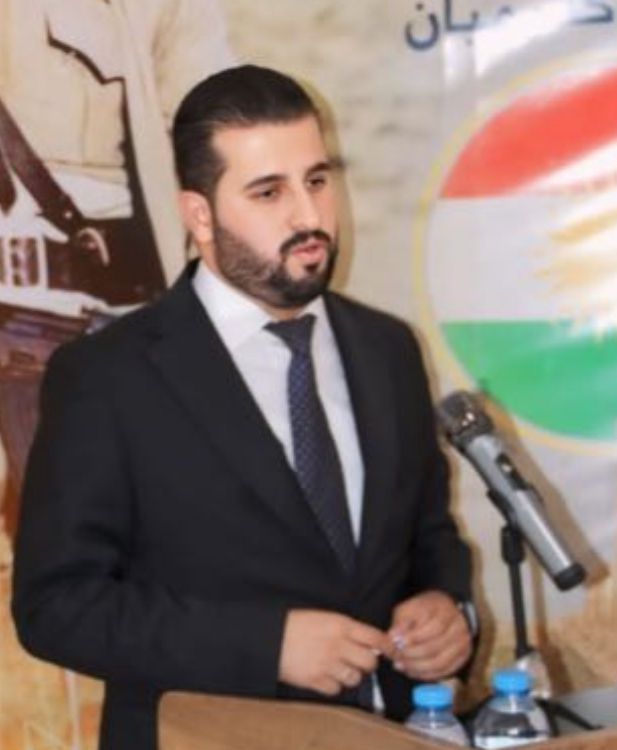
By: Frsat Said Shkur
As the political map of the Middle East in 2026 continues to suffer from intense conflicts between international poles, the Kurdistan Region emerges as a “distinct actor” within these complex equations. The triangular conflict between the U.S., Israel, and Iran has pushed the region to the brink of severe instability. However, what has protected the Kurdistan Region from this turmoil is not merely political agreements, but the presence of a leadership with historical depth and a clear strategic vision.
Leadership and Historical Decision-Making
In every historical turning point, nations require a “national leadership” capable of distinguishing between temporary interests and strategic survival. President Masoud Barzani, drawing on decades of experience in struggle and diplomacy, has successfully utilized the strategy of “active neutrality” as a shield to protect the people of Kurdistan.
This decision does not imply silence regarding rights, but rather prevents Kurdish soil from becoming a battlefield for proxy wars between regional powers. This political wisdom has led the region to be recognized not just as an administrative unit, but as an “oasis of stability” in a turbulent sea.
Energy Security and Geopolitical Weight
Today, the position of the Kurdistan Region is not confined within its geographical borders. With every threat to international energy routes, particularly the Strait of Hormuz, the region’s geopolitical weight grows as a strategic alternative for global energy security. This reality has made protecting the Kurdistan Region’s entity an international priority for the U.S. and Europe. Here, it becomes evident how precise and farsighted President Barzani’s policy has been in linking Kurdish national interests with global economic equations.
Resilience Against Pressures
In recent years, the Kurdistan Region has paid a heavy price to protect its sovereignty. Attacks by outlawed groups targeting economic and civilian infrastructure were failed attempts to undermine the successful model established in the region. The blood of Peshmerga martyrs and innocent civilians proves that Kurdish political will does not bow under the pressure of drones and missiles. This resilience sent a clear message to all: “Kurdistan is a factor for stability, not a threat.”
Rectifying the Erbil-Baghdad Equation
Within the domestic Iraqi context, President Barzani’s wisdom has consistently aimed at steering Baghdad away from a mentality of centralization and marginalization. As a federal and constitutional entity, the Kurdistan Region demands its financial and legal rights without becoming a burden to anyone. A strong Erbil signifies a strong, democratic Iraq that respects national and religious pluralism.
The protection of the Kurdish people during this stage has been achieved through the “wise diplomacy” led by President Barzani. This experience proves that internal unity and an accurate reading of global changes are the only paths for nations to survive in an era of great storms.