
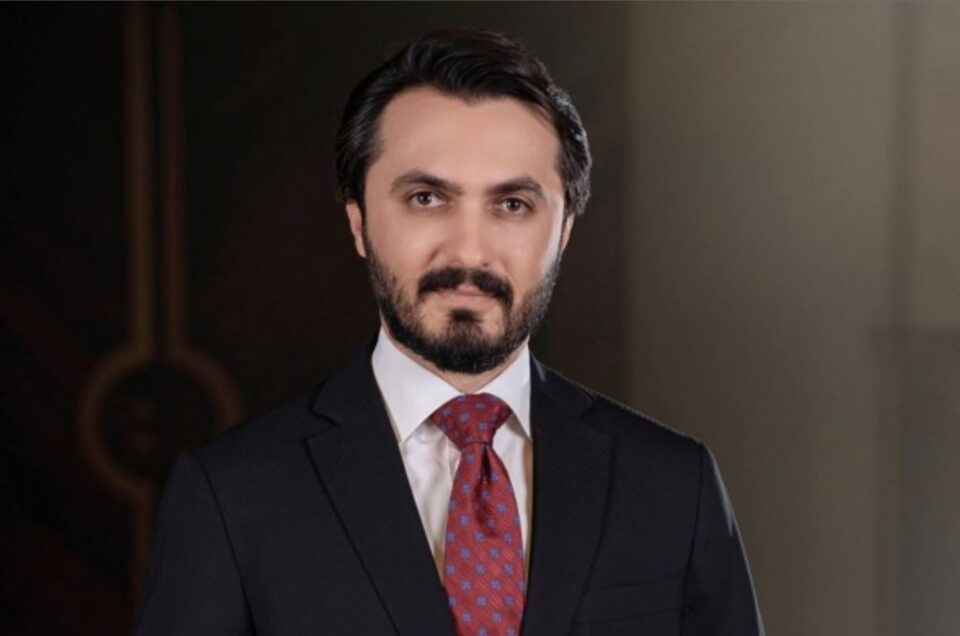
Dr. Danar Abdulghaffar outlines conditions for success in exclusive Kurdish Globe interview on Baghdad’s anti-corruption campaign
In a politically and economically challenging phase, Prime Minister Ali al-Zaidi’s campaign to combat corruption and prosecute those involved has become a central topic in Iraq’s public and political discourse. To assess this initiative and examine Kurdish political perspectives, Kurdish Globe conducted an exclusive interview with Dr. Danar Abdulghaffar, spokesperson for the Kurdistan Democratic Party (KDP) bloc in the Iraqi Council of Representatives.
The discussion highlights the KDP’s position, explores the structural roots of corruption in Iraq, and presents a framework for ensuring the effectiveness of the reform process.
Dr. Abdulghaffar stated that the KDP bloc has expressed early support for the campaign and remains open to cooperation where necessary. However, he emphasized that their support is conditional on the process being comprehensive and nationwide.
“The process must cover all Iraqi provinces. It should not be limited to the arrest of a minister or a number of officials. We are monitoring developments closely, as the initiative is still in its early stages.”
He stressed that the KDP’s broader vision remains the establishment of a pluralistic, democratic, and law-based state in Iraq. Corruption, he noted, extends beyond financial misconduct and has deeply affected all state institutions, making state-building impossible without structural reform.
Dr. Abdulghaffar highlighted Iraq’s long-standing crisis of trust between citizens and state institutions, arguing that addressing corruption requires more than arrests. Institutional reform must be accompanied by long-term educational and awareness efforts.
“Restoring trust cannot happen in a single year or through punitive actions alone. It requires a continuous societal process. Otherwise, the cycle will repeat.”
Referring to Iraq’s political history, he noted that institutional collapse after major political transitions has contributed to weakened public trust in state structures.
He also warned against turning the campaign into a personalized political project.
“This process must not be tied to any single figure, including the prime minister. It must be a state-wide effort involving the executive, legislature, and judiciary.”
Commenting on Iraq’s economic situation, Dr. Abdulghaffar described corruption as the primary factor behind institutional and financial paralysis.
“Corruption has paralyzed the state. Iraq today lacks a functioning economy; what exists is merely the distribution of public funds.”
Despite its vast oil wealth, Iraq continues to struggle with basic fiscal obligations, including salary payments for public employees. He argued that eliminating corruption would restore investor confidence and revitalize all economic sectors.
Dr. Abdulghaffar concluded by stressing that anti-corruption efforts must be institutionalized and treated as a unified national strategy rather than isolated actions.
“The process will not succeed by arresting a few individuals. It will continue unless its foundations are dismantled and controlled.”
He urged decision-makers in Baghdad to focus on structural reform rather than symbolic enforcement, warning that superficial measures would fail to produce lasting change.
The campaign launched by Prime Minister Ali al-Zaidi represents a significant test of Iraq’s political will to confront corruption and restore public trust. Its success depends on institutional coordination, judicial independence, and a national consensus free from political targeting.
If implemented comprehensively, the initiative could pave the way for economic recovery and renewed international confidence. However, any perception of politicization or selective enforcement risks deepening Iraq’s existing political and security challenges.
By: Frsat Said Shkur