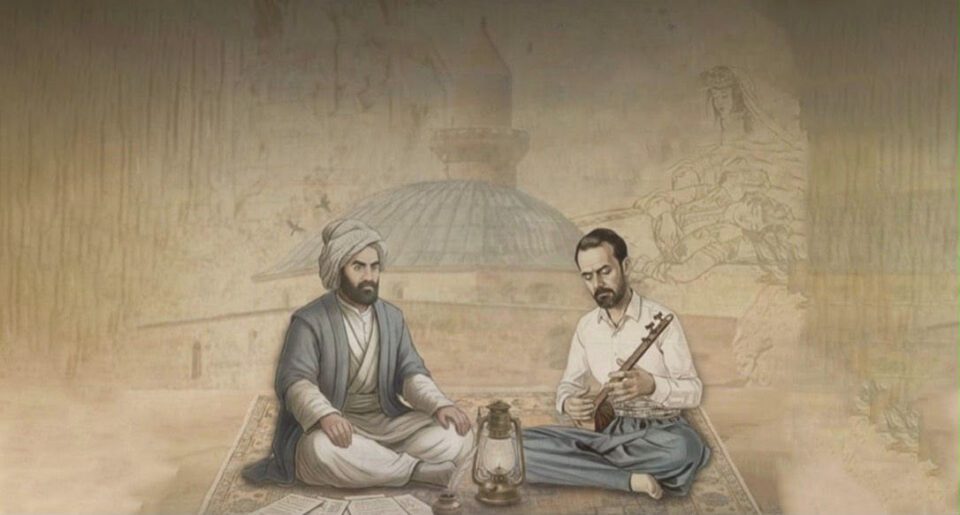
The Halabja performance reimagined Ahmad Khani’s literary masterpiece through music inspired by all four parts of Kurdistan.
A special concert inspired by Mem û Zîn, the timeless masterpiece of Kurdish poet Ahmad Khani, brought together music, literature, and cultural heritage in Halabja. Organized by the General Directorate of Culture and Arts of Halabja in cooperation with the Civilisation Development Organisation (CDO), the performance was held at Rwanga Hall.
Musician and vocalist Dana Muhyeddin described the concert as an artistic reinterpretation of one of the greatest works of Kurdish literature. Rather than presenting Mem û Zîn as a written text, the project transformed its themes into songs, melodies, and rhythms that offer audiences a new way to experience the classic work.
Drawing inspiration from the musical traditions of all four parts of Kurdistan, Muhyeddin blended northern melodies, southern songs, eastern musical influences, and western Kurdish vocal traditions into a single performance. He said the project reflects the diversity of Kurdish culture while expressing its shared identity through music.
Muhyeddin noted that Mem û Zîn, written by Ahmad Khani in 1692, is far more than a love story. It explores themes of freedom, identity, belonging, and the relationship between the individual and society. He said Khani viewed the Kurdish language as a cornerstone of national identity and cultural continuity.
The concert sought to reconnect audiences with Kurdish history and collective memory, using music to evoke the sounds, traditions, and landscapes of Kurdistan. According to Muhyeddin, each composition was designed to reflect the spirit of Kurdish villages, valleys, and storytelling traditions while presenting them in a contemporary artistic form.
Held in Halabja, a city that symbolizes both tragedy and resilience, the performance carried added significance by linking the past with the present through one of the most celebrated works of Kurdish literature. The event highlighted the enduring relevance of Mem û Zîn and demonstrated how Kurdish music continues to preserve and reinterpret the nation’s literary and cultural heritage.