
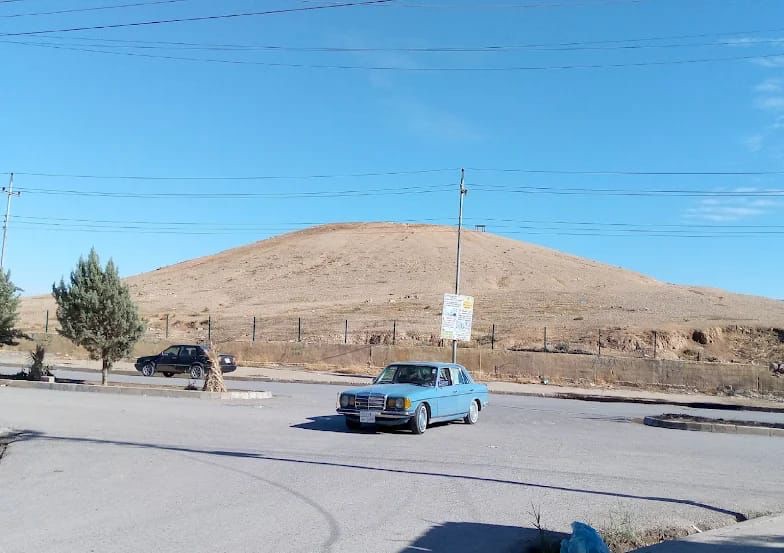
Archaeological mound in Qushtapa reflects centuries of settlement and regional importance.
A historic archaeological mound known as Bakoz Castle continues to stand on the plains south of Erbil, drawing the interest of historians and travellers for its deep connection to the region’s ancient past.
Located within the boundaries of Qushtapa, the site is considered one of the important archaeological mounds of the Erbil plain. Researchers believe the area was inhabited thousands of years ago, particularly during the Assyrian and Islamic eras.
Built on a tall circular mound, Bakoz Castle once served as a strategic observation point overlooking trade routes and fertile lands surrounding Erbil. Archaeologists say fragments of pottery, ceramics, and traces of old walls found across the site suggest that the area was once a thriving settlement.
Specialists continue to call for further scientific studies and archaeological excavations, saying the site may still hold valuable information about the civilizations that once lived in the region.
Experts also stress the importance of preserving the mound as part of the historical identity of the Kurdistan Region.
Qushtapa’s geographical location has historically made it an important transportation and trade corridor. The district lies south of Erbil and connects routes leading toward Kirkuk, Sulaymaniyah, and Mosul through the town of Makhmur.
The region is also bordered by the Didan mountain range to the east and the Zurgezraw hills to the west, helping make Qushtapa a key transit point that has contributed to the district’s economic importance over the years.