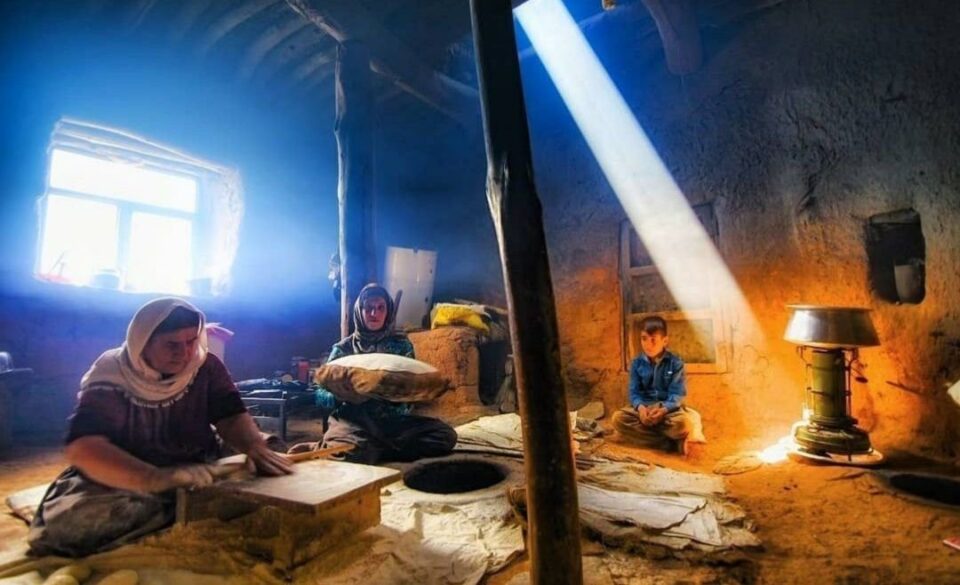
In Kurdish culture and folklore, many distinctive traditions are reflected in cuisine and food, and remain an active part of Kurdish identity, lifestyle, and social creativity to this day.
At the center of this cultural heritage are the clay oven and tiri bread, which for centuries have formed an essential part of life in Kurdish villages and towns. The clay oven is not only a place for baking bread but also a symbol of warmth, abundance, and family gathering. Traditionally, the presence of an oven in a household courtyard or garden reflects vitality and social life within the home.
Building a clay oven is itself a skilled craft. It requires red or pure clay with strong heat resistance. The clay is mixed with water and reinforced with goat hair or straw, which helps prevent cracking during drying and heating. The mixture is then shaped in circular layers to form a cylindrical structure with a wide base. After being left to dry under the sun for several days, the oven hardens naturally. Before first use, a small fire is lit inside to strengthen and prepare its inner walls.
Tiri bread, also known as thin or crispy bread, is one of the most distinctive traditional breads. Its preparation is a collective cultural practice, traditionally carried out by Kurdish women. In the evening, flour, water, salt, and yeast are mixed to form a slightly firm dough. Early in the morning, the dough is divided into small portions.
Each portion is flattened using a long, thin wooden tool known as a tirok on a round board, stretching it into a very thin sheet. The bread is then placed on a round cushion and carefully pressed onto the hot inner wall of the clay oven. It bakes within seconds before being removed and stored on a cloth or flat surface.
Tiri bread is also known for its health benefits. Because it is thin and fully baked, it is easy to digest and reduces bloating. It is traditionally made from whole-wheat flour rich in fiber, which helps regulate blood sugar and supports weight management. It also uses minimal yeast, often relying on natural fermentation, making it suitable for people with digestive sensitivities.
One of its unique features is its long shelf life. Once baked, it dries naturally and can be stored for months without spoiling. Before consumption, a small amount of water is sprinkled on it, restoring its softness and freshness.
The clay oven and tiri bread remain more than culinary traditions; they represent a form of cultural continuity and community health practice. In an age dominated by fast food and processed bread, these traditions continue to symbolize the authenticity, resilience, and cultural memory of Kurdish life.